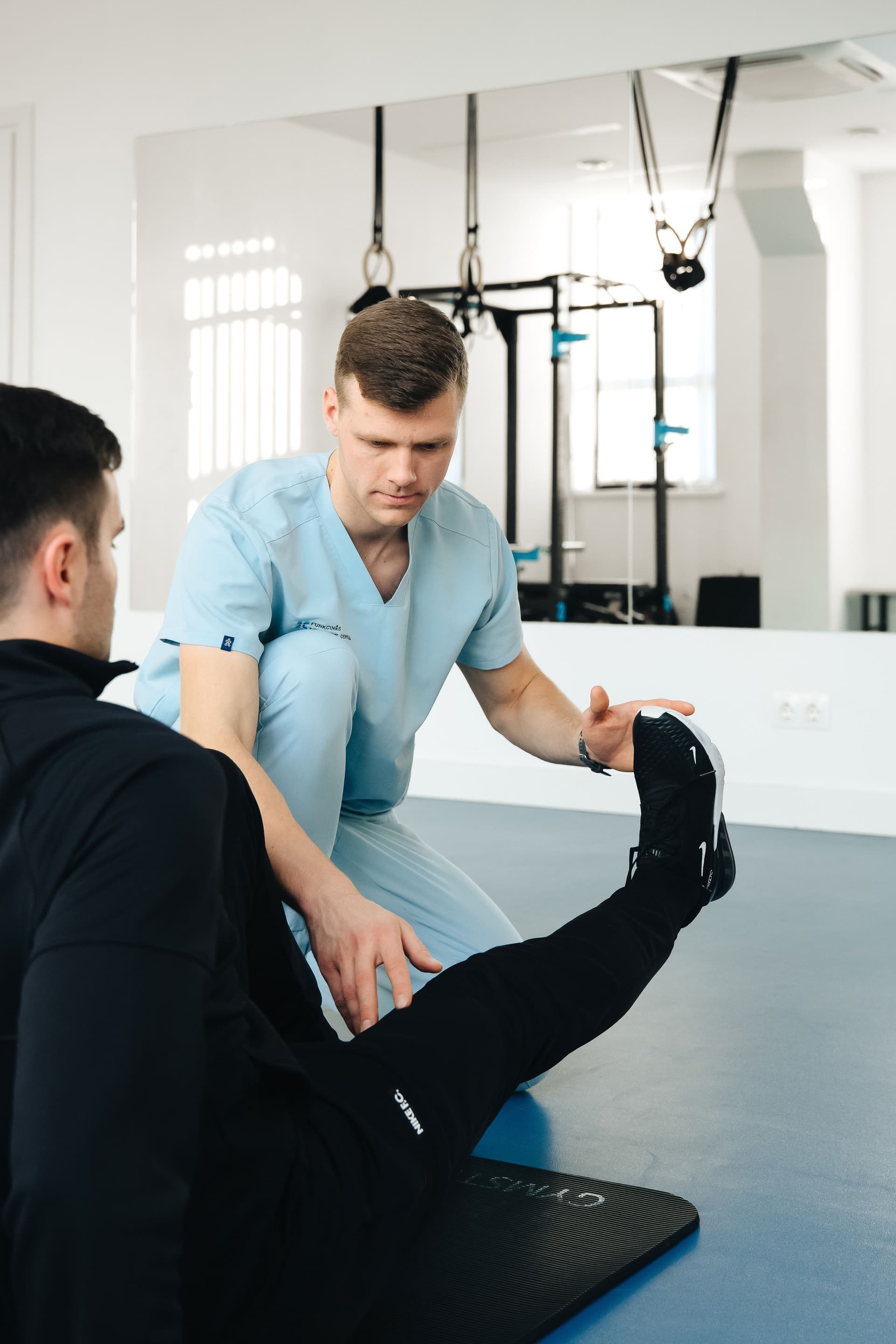
Sharp anterior knee pain during running, squats, or stair climbing is a classic sign of tracking imbalances in the kneecap — commonly known as runner’s knee or Patellofemoral Pain Syndrome (PFPS). Consulting a proven runner’s knee physiotherapist South Bengaluru athletes recommend can prevent months of frustrating stop-start training.
At Pro Physiotherapy in JP Nagar, our sports rehabilitation team treats hundreds of runners every year using biomechanical assessment, targeted strengthening, and running-gait retraining.
What Causes Patellofemoral Pain Syndrome?
Firstly, PFPS is rarely a “knee problem.” The pain is a symptom of biomechanical breakdown further up (hip) or further down (foot) the kinetic chain. Weak hip abductors and a vastus medialis obliquus (VMO) imbalance often cause the patella to mistrack laterally against the femoral groove.
According to a landmark analysis of patellofemoral pain risk factors, women runners are 2.2x more likely than men to develop PFPS — largely due to wider Q-angles and hip-abductor weakness.
Common PFPS Triggers
- Rapid mileage increases without proper progression.
- Weak gluteus medius and hip external rotators.
- Overpronation or worn-out running shoes.
- Excessive downhill or steep incline running.
- Tight ITB, hamstrings, and hip flexors.
How a Runner’s Knee Physiotherapist South Bengaluru Diagnoses PFPS
Secondly, a proper diagnosis is more than “touch and prescribe painkillers.” Our runners undergo:
- 2D video gait analysis on our treadmill (slow-motion frame-by-frame).
- Single-leg squat test to identify hip-drop or knee-valgus collapse.
- Manual patellar glide testing in medial, lateral, superior, and inferior directions.
- Hip-abductor and quad strength benchmarking using a hand-held dynamometer.
- Footwear and orthotic review — the small fixes that yield outsized results.
Patellofemoral Pain Exercises That Actually Work
Moreover, the exercise prescription for PFPS has evolved significantly. The old “just quad-set” approach has been replaced by hip-dominant strengthening.
Phase 1 (Weeks 1–2): Pain Relief & Activation
- Side-lying clamshells — 3 x 15 to fire gluteus medius.
- Isometric quad sets at 45° knee flexion.
- Foam rolling for the ITB, quads, and calves.
- Ice post-run for 10–15 minutes.
- Temporarily reduce mileage by 30% (not zero — movement is medicine).
Phase 2 (Weeks 3–4): Strength & Control
- Single-leg glute bridges — 3 x 12 per side.
- Step-ups (6-inch box) with slow eccentric lowering.
- Terminal knee extensions with resistance band.
- Wall sits with a ball between the knees (VMO activation).
- Lateral band walks — 20 steps each direction.
Phase 3 (Weeks 5–6): Running-Specific Retraining
- Cadence retraining — aim for 170–180 steps per minute.
- Increase step-width slightly to prevent knee valgus.
- Add plyometric drills (double- then single-leg hops).
- Gradual return-to-run programme with 10% weekly load progression.
Running-Gait Habits to Avoid
However, even the best exercises won’t fix poor mechanics. Consequently, avoid heel-striking with an overstride, running with hip-drop on the stance leg, or increasing weekly mileage by more than 10%. Also, steep incline running should be limited until quadriceps control is fully optimised. Additional resources are available from Physiopedia on PFPS.
Why Choose Pro Physiotherapy for Runner’s Knee Care
Additionally, our JP Nagar clinic is South Bengaluru’s trusted destination for competitive runners, weekend warriors, and beginners alike. We provide:
- FIFA-certified sports rehabilitation clinicians.
- 2D video gait analysis and biomechanical benchmarking.
- Custom 6–8 week return-to-run protocols.
- Home-visit sessions across South Bengaluru.
- Free access to our Return-to-Sport Readiness Scorecard.
Locations We Serve in South Bengaluru
Furthermore, our runners come from JP Nagar, Jayanagar, BTM Layout, HSR Layout, Bannerghatta Road, Koramangala, Kothnur, and Electronic City — many enjoying convenient home-visit sessions that fit around morning runs and evening training.
The Reality of Runner’s Knee Recovery
Therefore, with a structured 6–8 week programme, most patients return to full-mileage pain-free running. The key is early intervention — don’t wait until you’ve limped through five races before consulting a specialist.
Frequently Asked Questions
How long does it take to recover from runner’s knee?
Most PFPS cases resolve within 6–8 weeks with structured physiotherapy, hip-strengthening, and running-gait retraining. Severe or long-standing cases may take 10–12 weeks.
Can I keep running with runner’s knee?
Usually yes, but at a reduced volume (30% less mileage) and lower intensity. A qualified runner’s knee physiotherapist South Bengaluru trusts will design a modified running plan so fitness is preserved.
What are the best patellofemoral pain exercises for beginners?
Start with side-lying clamshells, single-leg glute bridges, and terminal knee extensions. These build the hip and quad stability required to correct patellar tracking without irritating the joint.
Do orthotics or shoes really help PFPS?
Yes, in select cases. Overpronators and runners with worn-out shoes often benefit from motion-control footwear or off-the-shelf orthotics prescribed after gait analysis.
Do you offer home-visit sports physiotherapy in South Bengaluru?
Absolutely. Pro Physiotherapy provides home-visit sessions across JP Nagar, Jayanagar, BTM Layout, HSR, Bannerghatta Road, and Electronic City — usually with same-day availability.
Run pain-free again. Let the sports injury experts at Pro Physiotherapy analyse your running gait and build a customised recovery path. Consult the leading runner’s knee physiotherapist South Bengaluru relies on. Reserve your assessment today →