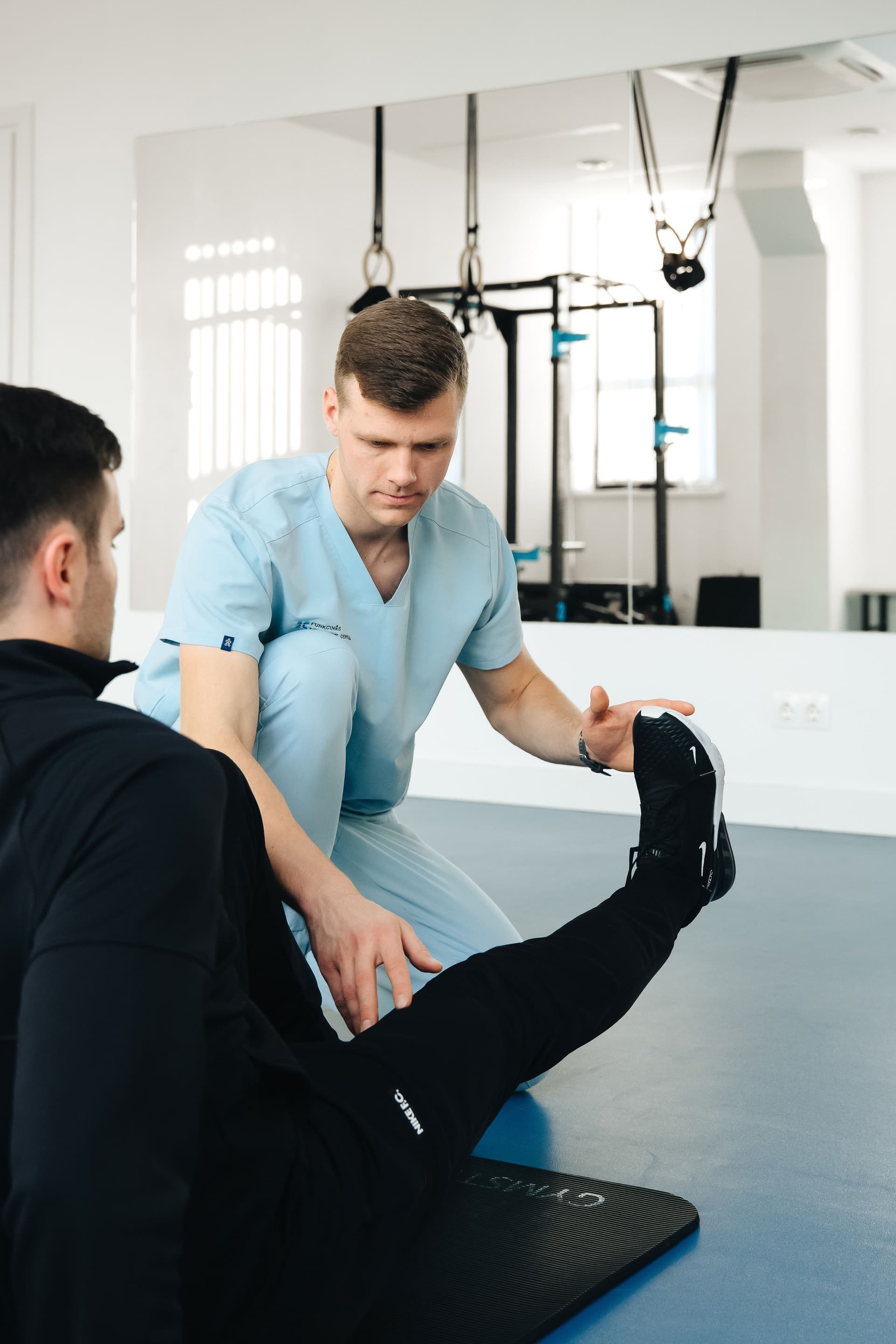
Successful ACL tear rehabilitation Bengaluru athletes rely on is never about “waiting it out.” Anterior cruciate ligament reconstruction requires a disciplined, step-by-step post-surgical physiotherapy recovery timeline to restore joint stability safely. Skipping phases is the leading cause of graft failure and re-injury.
At Pro Physiotherapy in JP Nagar, our FIFA-certified sports rehabilitation team has guided hundreds of athletes back to full pivot-sport function using an evidence-based protocol aligned with global best practices.
Understanding the First 6 Weeks After ACL Reconstruction
The primary goals during weeks 1–6 are regaining full knee extension, reducing post-operative swelling, and reactivating the quadriceps without stressing the graft. According to a comprehensive review of post-op ACL rehabilitation protocols, achieving full extension by week 2 is the single strongest predictor of a good long-term outcome.
Why the First 6 Weeks Are Non-Negotiable
- Extension loss becomes almost permanent if not restored in week 1–2.
- Persistent swelling shuts down quadriceps firing (arthrogenic muscle inhibition).
- Early weight-bearing accelerates graft revascularisation.
- Neuromuscular retraining begins in week 3 — not week 12.
Week-by-Week ACL Tear Rehabilitation Bengaluru Protocol
Week 1: Swelling Control & Early Range
- Cryotherapy 20 minutes, 4–5 times daily.
- Passive knee extensions using a heel-prop — 10 minutes, 3x/day.
- Quad sets: 30 reps every hour to “wake up” the muscle.
- Straight-leg raises (SLRs) with brace locked in extension.
- Partial weight-bearing with crutches as directed by your surgeon.
Week 2: Full Extension & Gait Retraining
- Achieve 0° extension and 90° flexion.
- Weight-bearing as tolerated; wean off crutches with a normalised gait.
- Stationary bike (no resistance) once knee reaches 105° flexion.
- Terminal knee extensions with resistance band.
- Patellar mobilisations to prevent adhesions.
Weeks 3–4: Early Strength Phase
- Mini-squats (0–45°) with mirror feedback for symmetrical loading.
- Bridging progressions and hip-abductor strengthening.
- Balance drills on a foam pad (eyes open → eyes closed).
- Progressive hamstring curls to protect the graft site.
Weeks 5–6: Closed-Chain Loading & Proprioception
- Leg-press machine at low load, high reps (3 x 15).
- Step-ups (4–6 inch box) with slow eccentric control.
- Single-leg balance progressions (60 seconds).
- Stationary bike with light resistance for cardio conditioning.
Common Mistakes That Delay ACL Recovery
Firstly, patients often push flexion too aggressively and provoke swelling. Secondly, some skip the extension prop believing rest is enough. Thirdly, DIY YouTube programs frequently omit the neuromuscular component, which is where ACL tear rehabilitation Bengaluru specialists at Pro Physiotherapy add the most value.
Return-to-Sport Testing Is Not Optional
Moreover, before we clear any athlete, we run a battery of tests: single-hop, triple-hop, crossover-hop, Y-Balance, and isokinetic quad-strength ratios. Try our free Return-to-Sport Readiness Scorecard to benchmark yourself between clinic visits.
Why Bengaluru Athletes Trust Pro Physiotherapy for ACL Recovery
Additionally, our sports-rehab team is led by senior clinicians with FIFA Sports Medicine certification and 15+ years of post-operative expertise. Book a session with our expert physiotherapists to receive a personalised protocol aligned with your surgeon’s notes.
Home-Visit Post-Surgical Physio Across Bengaluru
Furthermore, we offer home-visit ACL rehab across JP Nagar, Jayanagar, HSR, BTM, Koramangala, and Bannerghatta Road so you never miss a session during the critical first 6 weeks.
Frequently Asked Questions
How soon after ACL surgery should I start physiotherapy?
Ideally within 24–48 hours post-surgery. Early quad activation and swelling control dramatically improve long-term outcomes and reduce the risk of arthrogenic muscle inhibition.
How long does full ACL tear rehabilitation in Bengaluru take?
Total rehabilitation typically takes 9–12 months for return to pivot sports like football, kabaddi, or basketball. Straight-line running usually resumes at month 3–4 under professional guidance.
Is home-visit ACL post-surgical physiotherapy safe?
Yes. In fact, home-visit ACL rehab increases session adherence and lets us assess your real-world environment (stairs, floors, bed height) for safer recovery.
What is the difference between hamstring and patellar-tendon graft rehab?
The overall timeline is similar, but hamstring-graft patients need extra caution during weeks 4–8 with resisted hamstring work, while patellar-tendon graft patients require more intensive quad and patellar mobilisations.
Do I still need physiotherapy if I feel fine at 3 months?
Absolutely. Feeling “fine” and being biomechanically ready are two very different things. Nearly 30% of graft failures happen in patients who stopped physio early because pain was gone but neuromuscular control was still deficient.
Give your knee the recovery it deserves. Consult our senior sports rehabilitation specialists at Pro Physiotherapy JP Nagar for an evidence-based, structured ACL tear rehabilitation Bengaluru athletes trust. Book your consultation →