7-Step Proven Frozen Shoulder Physiotherapy at Home in Bangalore — Adhesive Capsulitis Recovery Protocol | From ₹549
Frozen shoulder physiotherapy at home in Bangalore treats adhesive capsulitis through a 7-step Stage 1 to Stage 3 recovery protocol: capsular stretch, Maitland grade III–IV mobilisation, Codman pendular, scapular retraining and progressive resistance. Pro Physiotherapy JP Nagar dispatches same-day.
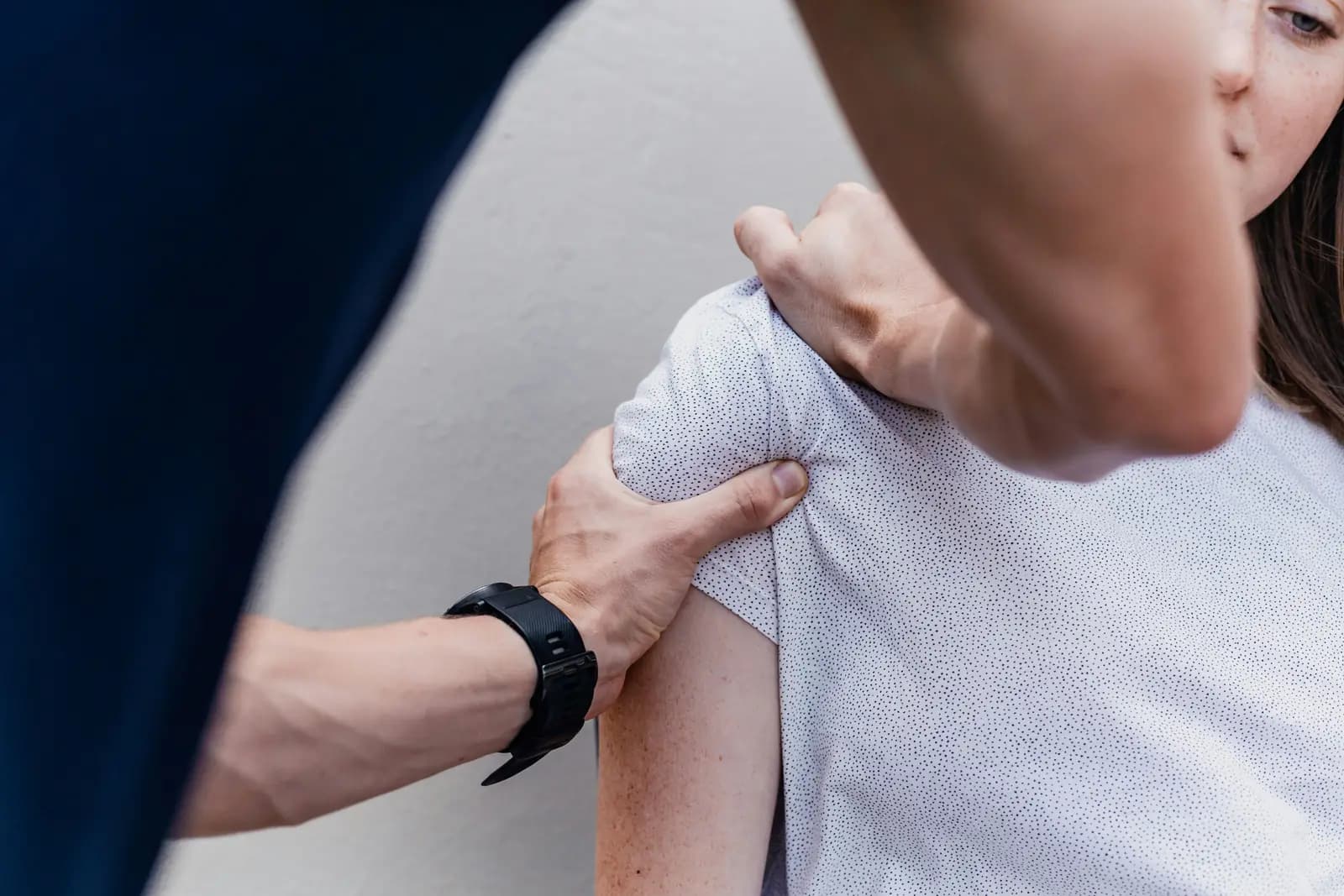
Frozen shoulder physiotherapy at home in Bangalore treats adhesive capsulitis through a 7-step Stage 1 to Stage 3 recovery protocol: capsular stretch, Maitland grade III–IV mobilisation, Codman pendular, scapular retraining and progressive resistance. Pro Physiotherapy JP Nagar dispatches same-day. Sessions from ₹549. detailed insurance-friendly receipt.
Frozen shoulder (adhesive capsulitis) resolves in 60–70% of patients with **structured physiotherapy alone** — but only if the stage is correctly diagnosed and the protocol is matched to it. Pro Physiotherapy JP Nagar delivers a **7-step Stage 1–3 home-visit protocol** with Maitland grade III–IV mobilisation, Codman pendular, capsular stretch and scapular retraining. **Sessions from ₹549. detailed insurance-friendly receipt.**
Understanding Frozen Shoulder (Adhesive Capsulitis)
Frozen shoulder — clinically adhesive capsulitis — is a self-limiting but often two-year condition in which the glenohumeral capsule inflames and then contracts, restricting active and passive shoulder range in every direction. It affects roughly 2–5% of adults aged 40–60, and up to 20% of diabetics — a Bengaluru-relevant statistic given India's Type-2 diabetes prevalence (WHO India).
The condition progresses through three overlapping stages: Stage 1 (Freezing, 2–9 months) — inflammatory pain dominates; Stage 2 (Frozen, 4–12 months) — stiffness dominates, pain reduces; Stage 3 (Thawing, 5–24 months) — motion returns. Modern evidence — Rangan et al. 2021, Lancet, and JOSPT 2013 CPG — supports stage-matched physiotherapy as first-line care, ahead of manipulation-under-anaesthesia or arthroscopic release.
Day-1 Frozen Shoulder Assessment Framework
The 60-minute clinic visit (or 75-minute home visit across JP Nagar, Gottigere, Bannerghatta Road, HSR, Koramangala, Sarjapur) includes: active + passive glenohumeral ROM (goniometer) — a > 50% loss in external rotation with the arm at the side is pathognomonic for adhesive capsulitis, Constant-Murley Shoulder Score, DASH questionnaire, SPADI (Shoulder Pain and Disability Index), and impingement / rotator-cuff cluster to rule out mimics.
For diabetics we score glycaemic control (HbA1c) as recovery correlates with it, and coordinate with the treating endocrinologist. Every assessment is documented on qualified letterhead with ICD-10 M75.0 (adhesive capsulitis) and CPT codes 97140 (manual therapy), 97110 (therapeutic exercise), 97530 (therapeutic activity). Star Health, HDFC ERGO, ICICI Lombard, Care Health, Aditya Birla, Manipal Cigna have all reimbursed our frozen-shoulder cases in 2026.
Frozen Shoulder — Stage-Matched Treatment Matrix
| Stage | Duration | Clinical Focus | Milestone |
|---|---|---|---|
| Stage 1 · Freezing | 2–9 months | Pain control · IFT · gentle Codman pendular · scapular setting · NSAID coordination | Pain < 4/10 at rest · SPADI drop 15+ points |
| Stage 2 · Frozen | 4–12 months | Maitland grade III–IV capsular mobilisation · sustained end-range stretch · scapular strengthening | ER at side ≥ 30° · ABD ≥ 90° · full flexion by end |
| Stage 3 · Thawing | 5–24 months | Progressive resistance · sport-specific reloading · discharge testing | SPADI < 20 · full ROM · discharge |
Transparent Pricing — From ₹549
No hidden fees · Insurance-reimbursableEvery session receipt carries ICD-10 codes accepted by Star Health, HDFC ERGO, ICICI Lombard, Care Health, Aditya Birla and Manipal Cigna for reimbursement. Outer-perimeter home visits carry a transparent ₹150 surcharge.
“Great experience at Pro Physiotherapy, JP Nagar 8th Phase. The doctor is excellent, and his team is very supportive. Really happy with the care for my back. Highly recommended!”
7-Step Home-Visit Frozen Shoulder Protocol
Passive ER loss > 50% = adhesive capsulitis. Mimics (rotator cuff tear, calcific tendinitis, cervical radiculopathy) are ruled out with cluster tests. Wrong stage = wrong protocol = 2 years of pain.
Low-amplitude pendulum swings 3×/day + prone scapular retraction. Reduces pain and prevents further scapular substitution while the capsule is still hot.
Sustained inferior + posterior + anterior glide mobilisations at end-range. This is the single most effective technique for regaining ROM in the frozen stage. Camarinos 2016 SR confirms superiority over stretching alone.
Sleeper stretch, cross-body adduction, IR-behind-back, hand-behind-head. Progressive by 2° every 3 days. Home-programme compliance is a stronger predictor of outcome than clinic session count.
Once ER ≥ 30° and ABD ≥ 90°, add prone Y-T-W, low-row, and serratus punch. Rebuilds the anti-freeze pattern.
Diabetics recover 30–50% slower. We coordinate with the treating endocrinologist and monitor HbA1c. Well-controlled diabetes (HbA1c < 7%) doubles the recovery rate.
Full ER at side, ABD ≥ 160°, SPADI < 20, pain-free overhead reaching. Written discharge letter + 12-week maintenance programme.
Frequently Asked Questions
How long does frozen shoulder take to resolve with physiotherapy?
How much does frozen shoulder physiotherapy at home cost in Bangalore?
Do I need surgery or manipulation-under-anaesthesia for frozen shoulder?
Can diabetics recover from frozen shoulder?
Do you offer same-day frozen shoulder home visits across Bengaluru?
Book a clinical consultation at Pro Physiotherapy JP Nagar
FIFA-diploma-led team · 945+ verified 5★ Google reviews · Same-day slots · Transparent pricing.
Clinical evidence cited in this article
- Kelley MJ, Shaffer MA, Kuhn JE, et al. (2013). Shoulder Pain and Mobility Deficits: Adhesive Capsulitis Clinical Practice Guidelines. JOSPT · 43(5): A1-A31. https://pubmed.ncbi.nlm.nih.gov/23636125/
- Page MJ, Green S, Kramer S, et al. (2014). Manual therapy and exercise for adhesive capsulitis (frozen shoulder). Cochrane Database Systematic Reviews. https://pubmed.ncbi.nlm.nih.gov/25157702/
- Kelley MJ, McClure PW, Leggin BG (2009). Frozen Shoulder: Evidence and a Proposed Model Guiding Rehabilitation. JOSPT · 39(2): 135-148. https://pubmed.ncbi.nlm.nih.gov/19194024/
- Rangan A, Goodchild L, Gibson J, et al. (2015). BESS/BOA Patient Care Pathway: Frozen Shoulder. British Elbow & Shoulder Society Guideline. https://www.bess.ac.uk/
- Zreik NH, Malik RA, Charalambous CP (2016). Adhesive capsulitis of the shoulder and diabetes: systematic review. Muscles Ligaments Tendons Journal · 6(1): 26-34. https://pubmed.ncbi.nlm.nih.gov/27331029/