Cervical Spondylosis in IT Professionals: Expert Care Guide
Dr. J Mazumdar, BPT27 July 2026 Last reviewed 3 months ago
Medically reviewedby Dr. J Mazumdar, BPT (Master’s Degree in Sports Physiotherapy, BPT · FIFA Sports Medicine Certified) Last reviewed: 27 July 2026
# Cervical Spondylosis in IT Professionals: Expert Care Guide
If you work in one of Electronic City's many IT parks and experience persistent neck pain, stiffness, or headaches, you're not alone. Cervical spondylosis—age-related wear and tear of the neck vertebrae—affects nearly 60% of desk workers by age 40. The long hours at computer screens, poor posture, and stress common in Bengaluru's tech hubs accelerate this condition. Understanding cervical spondylosis and taking early action can prevent chronic pain and maintain your productivity. This guide explains what IT professionals in Electronic City need to know about managing neck health effectively.
## What Is Cervical Spondylosis and Why IT Workers Are at Risk
Cervical spondylosis is the degeneration of bones, discs, and joints in your neck (cervical spine). While it's often considered an age-related condition, IT professionals develop it much earlier due to prolonged static postures. When you sit hunched over a laptop for 8-10 hours daily—common in offices around Hosur Road and Bommasandra—the cervical discs lose moisture and flexibility. The vertebrae develop bone spurs, and the surrounding muscles become tight and weak. Studies show that forward head posture (where your head juts forward by just 2-3 inches) increases the load on your neck by 20-30 pounds. This constant strain accelerates disc degeneration. Additionally, stress and inadequate breaks worsen muscle tension, creating a cycle of pain and stiffness that many Electronic City professionals know too well.
## Common Symptoms You Shouldn't Ignore
Cervical spondylosis presents differently in each person, but IT workers typically notice neck stiffness that worsens by evening, especially after back-to-back meetings or coding sessions. You might feel a grinding sensation when turning your head, or experience headaches that start at the base of your skull. Many patients from Electronic City Phase 1 and Phase 2 report pain radiating into shoulders and upper back. More concerning symptoms include numbness or tingling in arms and fingers—this happens when bone spurs compress nerves. Some experience weakness in hands, making it difficult to type or hold a coffee mug. Dizziness and balance issues can occur if blood flow to the brain is affected. If you notice these symptoms intensifying during your commute home on Hosur Road or after weekend gaming sessions, it's time to address the root cause rather than relying on painkillers.
## How Poor Workstation Setup Accelerates Neck Damage
Your workstation ergonomics directly impact cervical health. In many Electronic City offices, monitors are placed too low, forcing you to look downward for hours. This flexed neck position compresses the front of cervical discs while overstretching posterior muscles. Keyboards positioned too far away cause shoulder hunching and forward head posture. Chairs without proper lumbar support tilt your pelvis backward, affecting the entire spinal curve. Even your laptop placement matters—working from home in Begur or Harlur without a proper desk setup can be worse than office ergonomics. The air-conditioned environment in tech parks also contributes; cold air stiffens neck muscles, reducing blood flow. Research shows that for every inch your head moves forward from neutral alignment, the effective weight on your cervical spine increases by approximately 10 pounds. Over months and years, this cumulative stress causes irreversible disc changes.
## Evidence-Based Physiotherapy Treatments That Work
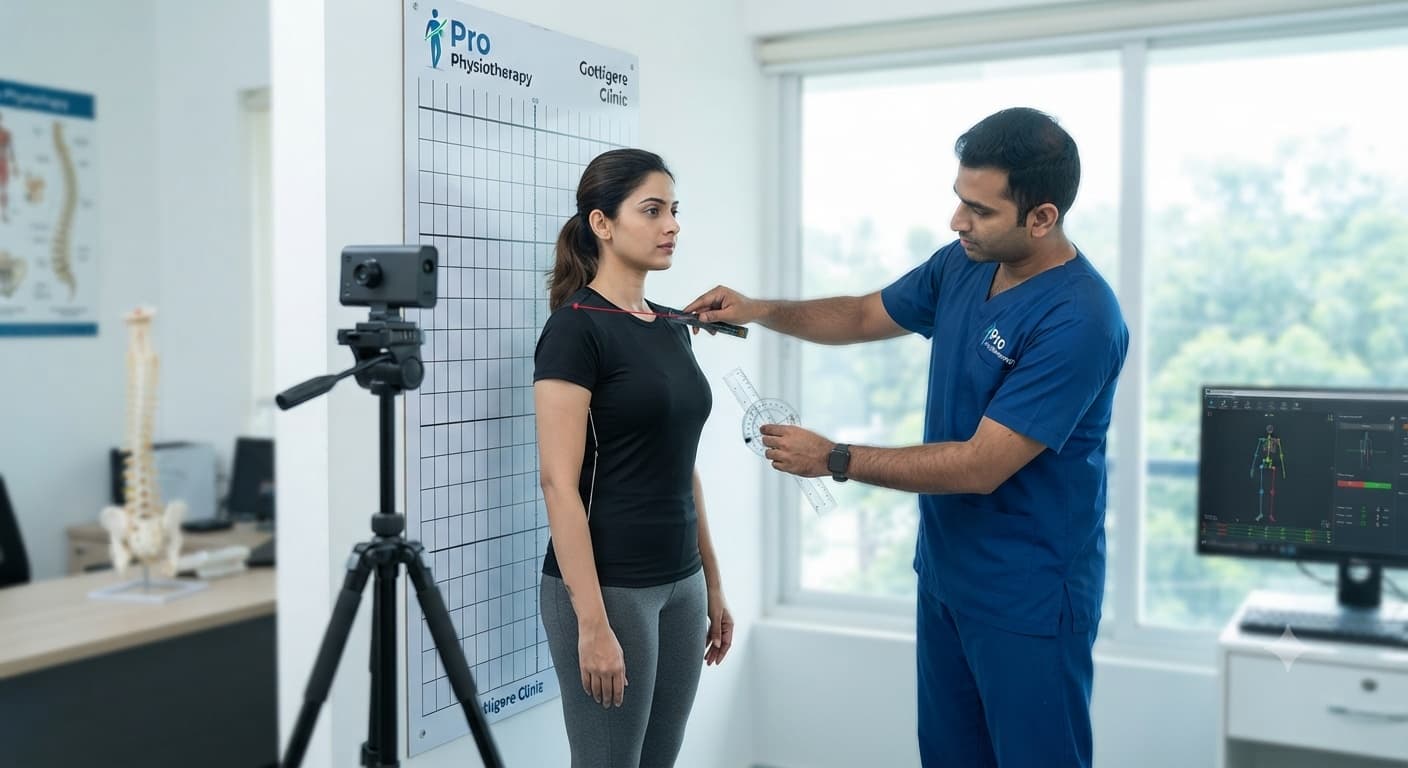
Physiotherapy is the gold-standard non-surgical treatment for cervical spondylosis. At Pro Physiotherapy, our approach combines manual therapy, therapeutic exercises, and postural correction tailored to IT professionals' needs. Manual therapy includes gentle joint mobilizations that restore neck movement and reduce stiffness. Soft tissue techniques release tight muscles in the neck, shoulders, and upper back. We use evidence-based exercises to strengthen deep neck flexors—muscles that stabilize your cervical spine but weaken with prolonged sitting. Chin tucks, scapular retractions, and thoracic extensions are prescribed based on your specific movement patterns. Modalities like ultrasound therapy and TENS reduce inflammation and pain. Importantly, we teach you how to modify your workstation—monitor height, chair adjustments, keyboard placement—so treatment benefits last. Many of our Electronic City patients see significant improvement within 6-8 sessions when they combine physiotherapy with daily home exercises.
## Simple Desk Exercises to Practice During Work Hours
You don't need to leave your Electronic City office to care for your neck. These exercises take 2-3 minutes and can be done every hour. **Chin tucks**: Sit tall, gently draw your chin straight back (like making a double chin), hold 5 seconds, repeat 10 times. This strengthens deep neck stabilizers. **Shoulder blade squeeze**: Pull your shoulder blades together, hold 5 seconds, release; do 10 repetitions. This counters rounded shoulders. **Neck rotations**: Slowly turn your head left and right, holding each side for 3 seconds; repeat 5 times each direction. **Upper back stretch**: Clasp hands behind your head, gently arch backward over your chair, hold 10 seconds. **Wrist and finger stretches**: Extend arms, pull fingers back gently, hold 10 seconds each hand. Set a phone reminder for these micro-breaks. Patients who practice these consistently report 40% less end-of-day neck pain. Remember, movement is medicine—even small, frequent movements combat the damage of static postures during those long sprints before product releases.
## When to See a Physiotherapist for Neck Pain
While occasional neck stiffness is common, certain signs indicate you need professional help. Consult a physiotherapist if neck pain persists beyond two weeks despite rest and over-the-counter medications. Seek immediate care if you experience numbness, tingling, or weakness in arms or hands—these suggest nerve compression requiring urgent intervention. Frequent headaches originating from the neck, difficulty turning your head while driving, or pain disrupting sleep are red flags. If you've tried online exercises without improvement, a personalized assessment is essential. Many Electronic City professionals delay treatment, hoping pain will resolve on its own, but early physiotherapy prevents progression to chronic conditions requiring surgery. Pro Physiotherapy offers convenient home visits across Electronic City, Bommasandra, Begur, and surrounding areas. Our physiotherapists bring all necessary equipment to your home, saving you the commute after exhausting work days. **Book a home assessment today** by calling us or visiting our website—most patients experience noticeable relief within the first week of treatment.
## Preventing Cervical Spondylosis: Long-Term Strategies
Prevention is always better than cure, especially for IT professionals with decades of desk work ahead. Start with the 20-20-20 rule: every 20 minutes, look at something 20 feet away for 20 seconds. This reduces eye strain and prompts posture changes. Invest in an ergonomic chair with adjustable lumbar support and armrests. Position your monitor so the top third of the screen is at eye level, about arm's length away. Use a laptop stand and external keyboard if working from home in Electronic City. Take walking breaks—even a 5-minute walk around your Bommasandra office floor improves circulation. Strengthen your core and upper back through regular exercise; yoga and swimming are excellent choices. Many of our patients join gyms near Electronic City Metro or practice yoga in Begur parks. Stay hydrated—discs need water to maintain their cushioning properties. Manage stress through meditation or hobbies; chronic stress increases muscle tension. Finally, schedule regular physiotherapy check-ups, especially if you have a family history of spine issues. These proactive steps can add years of pain-free productivity to your IT career.
## Frequently Asked Questions
**Q: Can cervical spondylosis be completely cured?**
A: Cervical spondylosis involves structural changes in the spine that cannot be fully reversed. However, physiotherapy can significantly reduce pain, restore function, and prevent progression. Most IT professionals achieve excellent symptom control and return to normal activities with consistent treatment and lifestyle modifications.
**Q: How long does physiotherapy treatment take for cervical spondylosis?**
A: Most patients notice improvement within 2-3 weeks of starting physiotherapy. Complete recovery typically takes 6-12 weeks, depending on severity and adherence to home exercises. Chronic cases may require longer treatment. Our Electronic City home-visit physiotherapists create personalized timelines during your initial assessment.
**Q: Is surgery necessary for cervical spondylosis in IT workers?**
A: Surgery is rarely needed for cervical spondylosis. Less than 5% of cases require surgical intervention, usually when there's severe nerve compression causing progressive weakness or loss of bladder/bowel control. Physiotherapy successfully manages 90% of cases without surgery.
**Q: Can I continue working during physiotherapy treatment?**
A: Yes, most IT professionals continue working during treatment. Your physiotherapist will teach you workstation modifications, pain management techniques, and exercises you can do at your desk. Some patients take 2-3 days off during acute pain episodes, but complete work cessation is rarely necessary.
**Q: Are home-visit physiotherapy sessions as effective as clinic visits?**
A: Absolutely. Home-visit physiotherapy offers the same evidence-based treatments as clinic sessions. In fact, treating you in your actual work environment allows our physiotherapists to assess and correct your real-world ergonomics. Many Electronic City patients prefer home visits as they save commute time and receive care in a comfortable, familiar setting.
Was this helpful?