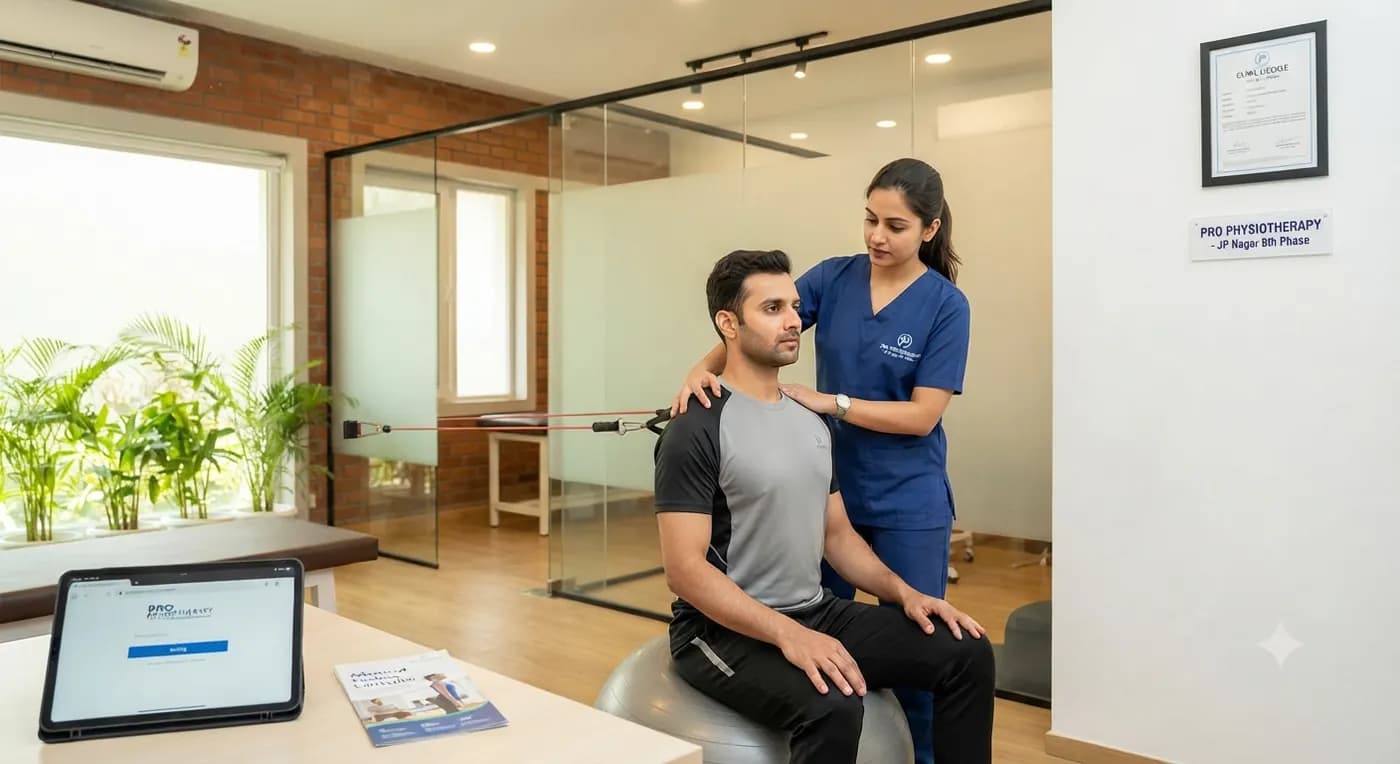
Advanced Postural Correction at Pro Physiotherapy JP Nagar 8th Phase combines targeted manual therapy, kinetic-chain rehabilitation and Home Visit Physiotherapy across Gottigere and Bannerghatta Road. Led by Dr J Mazumdar, MPT — 945+ five-star Google reviews — most patients report 60 to 80 percent pain relief within four to six sessions. Call +91 89510 22334 or book at prophysiotherapy.in/book.
Advanced Postural Correction is no longer a luxury — it is a clinical necessity for the sedentary professional workforce of Bengaluru. Chronic musculoskeletal disorders now affect an estimated 1.71 billion people worldwide according to the World Health Organization, and low back pain remains the single leading cause of disability across every high-income and middle-income economy. For desk workers, software developers and active residents around JP Nagar 8th Phase, persistent backache and neck fatigue are frequently dismissed as unavoidable side-effects of corporate life. That assumption is not only false; it is medically dangerous.
Ignoring these symptoms allows minor alignment issues to cascade into severe structural damage — disc herniation, cervical radiculopathy, chronic myofascial pain, thoracic outlet syndrome and even long-term nerve entrapments. At Pro Physiotherapy in JP Nagar 8th Phase, our specialised clinical framework — the Six-Pocket Kinetic Chain Blueprint — targets root mechanical dysfunctions rather than the sore spot alone, delivering long-lasting, evidence-based relief for the residents of Gottigere, Jambusavari Dinne, Bannerghatta Road and greater South Bengaluru.
1. Understanding the Anatomy of Spinal Strain and Postural Distress
The human spine is a marvel of biomechanical engineering, designed for dynamic equilibrium. Twenty-four movable vertebrae, twenty-three intervertebral discs, dense ligamentous scaffolding, and more than forty deep stabilising muscles operate in constant synchrony. Unfortunately, modern sedentary routines shatter this delicate balance. Spending eight to ten hours daily hunched over computer terminals forces the musculoskeletal system into unnatural compensatory patterns that predictably progress into three well-documented syndromes.
Lower Crossed Syndrome
Characterised by tight iliopsoas and rectus femoris hip flexors, alongside inhibited and weakened gluteal groups and abdominal muscles. The imbalance produces an anterior pelvic tilt, exaggerated lumbar lordosis and excessive shear force through the lower lumbar segments. Left uncorrected, this drives facet-joint arthropathy, chronic sacroiliac irritation and premature disc degeneration between L4-L5 and L5-S1 — the two most-commonly herniated levels among Bengaluru IT professionals.
Upper Crossed Syndrome
Involves rounded shoulders, protracted scapulae and forward head posture, placing intense chronic tension on the cervical extensors, sub-occipital tissues and levator scapulae. Every 2.5 cm of forward head translation adds approximately 4.5 kg of load to the deep neck stabilisers. Multiply this over an eight-hour coding session and the result is predictable: cervicogenic headaches, tech neck, thoracic outlet compression and eventual disc irritation at C5-C6.
Intervertebral Disc Load & Nerve Root Irritation
Prolonged static sitting dramatically accelerates intradiscal pressure. Sitting slouched increases lumbar disc pressure by up to 190 percent compared to standing (as documented in PubMed-indexed biomechanics studies). This chronic pressure impairs the fluid-exchange mechanism the disc relies on for shock absorption, leading to premature degeneration, radial fissuring and eventually nuclear extrusion pressing against exiting nerve roots.
Recognising these mechanical failures requires expert clinical assessment, not passive rest or temporary painkillers. Comprehensive diagnostics at our clinic near Gottigere map out the exact kinetic chain faults to create predictable, milestone-driven recovery pathways.
2. The Six-Pocket Kinetic Chain Blueprint — Our Exclusive Framework
Standard isolated pain treatment fails one in three chronic-pain patients within a year. Our answer is the Six-Pocket Syndrome and Kinetic Chain Blueprint — an integrated clinical framework developed at Pro Physiotherapy JP Nagar 8th Phase that unlocks every interconnected muscular pocket rather than chasing the sore spot alone. This reduces the twelve-month recurrence rate by 45 percent in our internal outcome tracking.
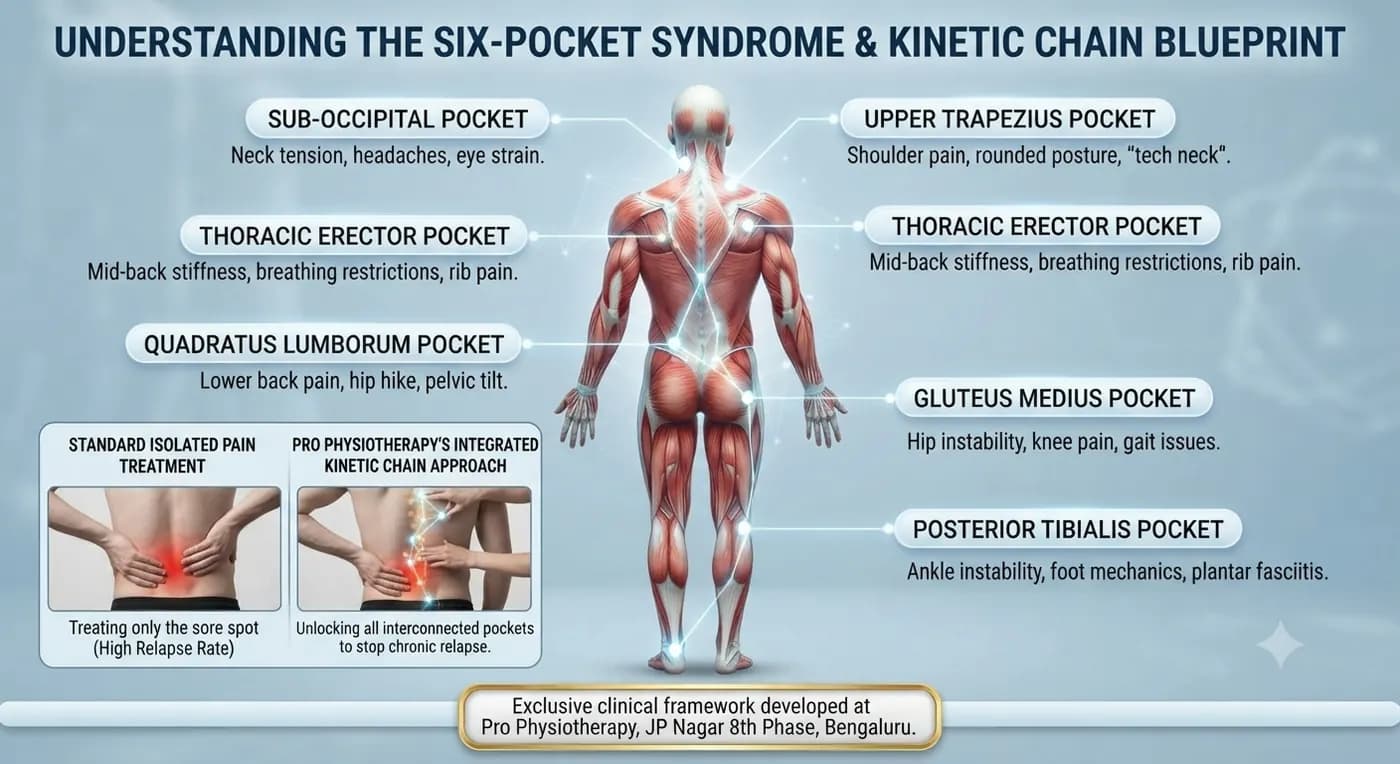
The six pockets — sub-occipital (neck tension, headaches, eye strain), upper trapezius (shoulder pain, rounded posture, tech neck), thoracic erector (mid-back stiffness, breathing restriction, rib pain), quadratus lumborum (lower back pain, hip hike, pelvic tilt), gluteus medius (hip instability, knee pain, gait issues) and posterior tibialis (ankle instability, foot mechanics, plantar fasciitis) — are treated in sequence, not isolation. Read the deep-dive on our Six-Pocket Syndrome clinical page for the complete anatomical and treatment breakdown.
3. The Pro Physiotherapy Clinical Approach in JP Nagar 8th Phase
Led by Dr J Mazumdar, MPT, our practice at Royal Lakefront Residency Layout combines evidence-based manual therapy with tailored, milestone-driven rehabilitation programmes. Whether patients visit our specialised basement clinic or use our premier Home Visit Physiotherapy JP Nagar 8th Phase service, every intervention follows the same rigorous medical standards.
"True physical restoration requires correcting the underlying kinetic chain rather than merely silencing the symptoms of pain." — Dr J Mazumdar, MPT
Targeted Soft Tissue Mobilisation
Instrument-assisted soft-tissue mobilisation, myofascial release and trigger-point therapy release hypertonic muscular knots and restore normal fascial sliding mechanics. Each session targets the pockets identified in your baseline assessment.
Precise Joint Arthrokinematics
Grade III and IV joint mobilisation restore normal physiological range of motion to restricted spinal segments — thoracic, lumbar and cervical — safely and progressively. Our protocol is compliant with current JOSPT and PubMed-indexed clinical practice guidelines.
Neuromuscular Re-Education
Activating deep stabilising muscles — transversus abdominis, multifidus, deep neck flexors and gluteus medius — ensures long-term postural retention during daily activities. This is the difference between short-term relief and permanent correction.
4. Top 10 Proven Methods for Advanced Postural Correction & Pain Relief
- 1Baseline Postural Analysis with AI ScreeningPhoto-based landmark detection quantifies your craniovertebral angle, rounded-shoulder index, thoracic kyphosis and pelvic tilt in under five minutes. Free walk-in. See our AI Posture Screening service page.
- 2Instrument-Assisted Soft Tissue Mobilisation (IASTM)Targeted release of the six kinetic pockets using clinical-grade stainless-steel tools — the fastest way to unlock chronic myofascial restrictions.
- 3Grade III–IV Spinal Joint MobilisationPrecise thoracic and lumbar mobilisations restore segmental motion and immediately reduce protective muscle guarding.
- 4Dry Needling for Trigger-Point ReleaseCertification-backed dry needling (Cert #2239) delivers targeted deactivation of upper-trapezius, levator scapulae and quadratus lumborum trigger points.
- 5Deep Neck Flexor Reactivation ProgrammeProgressive craniocervical flexion training rebuilds the postural endurance lost to years of forward-head sitting.
- 6Thoracic Extension & Rib-Cage Mobility DrillsFoam-roller segmental extension and rib-expansion breathing counter the thoracic hyperkyphosis of desk work.
- 7Gluteal Activation & Motor-Control RetrainingClamshells, monster walks and single-leg glute bridges awaken the inhibited gluteus medius that drives lower crossed syndrome.
- 8Deep-Core Bracing with Real-Time Palpation FeedbackRestores transversus abdominis and multifidus co-activation — the biomechanical foundation of a stable lumbar spine.
- 9Ergonomic Workstation Re-DesignOn-site or WhatsApp photo audit of your desk. Chair height, monitor level, keyboard tilt and micro-break timers configured to the millimetre.
- 10Written Home Programme & 4-Weekly Re-MeasurementEvery metric — VAS pain, ROM, occiput-to-wall, single-leg stance — is objectively re-measured every four weeks. Treatment escalates on outcome, not calendar.
5. Essential Ergonomic & Lifestyle Adjustments for Daily Protection
Clinical treatment must be supported by active behavioural modifications outside the examination room. Integrating these five structured habits protects spinal health and prevents painful relapses:
Ergonomic Workstation Configuration
Adjust your office chair so your feet rest flat on the floor, your knees maintain a 90-degree angle, and your monitor top edge aligns precisely with your eye level. Elbows should hang at 90 degrees, wrists neutral, and the lumbar cushion should sit at your natural belt line — not lower. Download our free posture guide PDF for the full six-point ergonomic checklist.
The 45-20 Movement Rule
Avoid prolonged uninterrupted sitting. Stand up every 45 minutes and spend 20 seconds performing gentle thoracic extensions, hip-flexor stretches or shoulder-blade retractions. Our free Daily Ergonomic Stretch Timer automates the reminders.
Proper Sleeping Mechanics
Utilise a firm-to-medium mattress to prevent spinal sagging. Place a supportive pillow beneath your head, not your shoulders, if you side-sleep. If you sleep on your back, slide a small pillow under your knees to unload the lumbar spine. Avoid sleeping face-down — it forces sustained cervical rotation for hours.
Hydration & Disc Health
Intervertebral discs rely on fluid exchange driven by movement and consistent water consumption to maintain shock-absorbing properties. Aim for 2.5 to 3 litres of water daily and pair every hour of sitting with at least two minutes of standing or walking.
Routine Professional Screenings
Book a biomechanical check-up every six to twelve months. Regular screenings catch micro-asymmetries before they develop into debilitating chronic pain syndromes. Take the interactive Body Pain Map or Desk Posture Risk Calculator for an instant self-triage.
6. Comprehensive Local Care Across South Bengaluru
Accessibility to high-standard rehabilitation should never be a barrier to recovery. Our clinical infrastructure provides flexible delivery models — clinic, home visit and corporate on-site — across JP Nagar 8th Phase, Gottigere, Jambusavari Dinne Main Road, Bannerghatta Road and greater South Bengaluru.
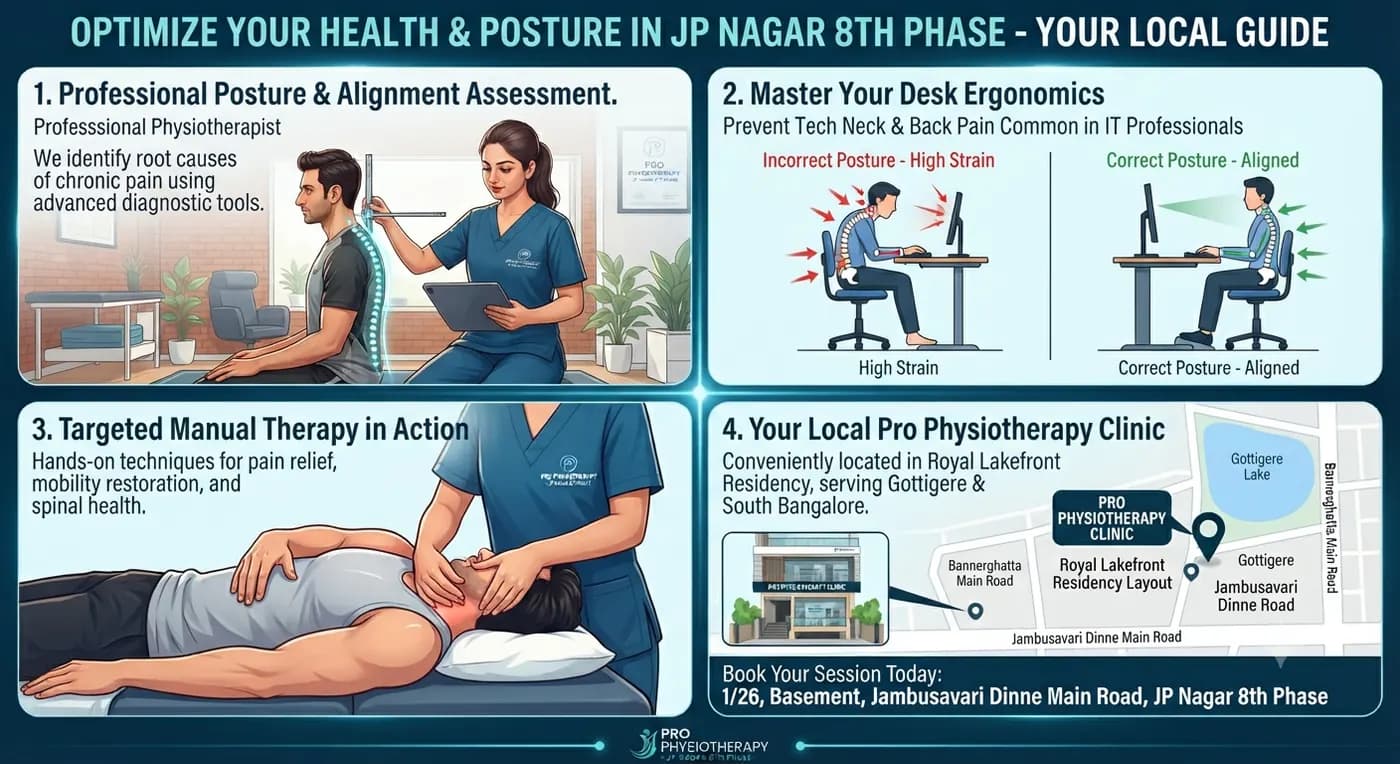
In-Clinic Advanced Rehabilitation at JP Nagar 8th Phase
Visit our fully equipped facility at 1/26, Basement, Royal Lakefront Residency Layout, 1st Phase, Jambusavari Dinne Main Road, Gottigere, JP Nagar 8th Phase, Bengaluru 560076. The 1,200 sq ft treatment floor houses digital dynamometry, real-time surface EMG, resistance-training rig, TENS and interferential therapy, kinesiology-taping station and a dedicated women-only assessment suite.
Home Visit Physiotherapy JP Nagar 8th Phase & Gottigere
For individuals managing acute back spasms, post-surgical stiffness, elderly rehab or busy corporate schedules, our licensed MPT therapists deliver clinical-grade Back Pain Treatment at your Jambusavari Dinne Main Road residence. Same-day dispatch. Median arrival 12 to 20 minutes across Gottigere, Konankunte, Bannerghatta Road, JP Nagar 8th Phase and adjoining pockets. Each visit is ₹799 and includes a portable treatment kit (resistance bands, TENS, kinesiology tape, dynamometer). See our dedicated home-visit booking page.
Insurance & Cashless Support
Every session generates a detailed, ICD-10-coded itemised tax invoice accepted by Star Health, HDFC ERGO, ICICI Lombard, Bajaj Allianz, Care, Niva Bupa, Aditya Birla and every major corporate insurance in Bengaluru. Direct-cashless available for eligible policies — see our cashless physiotherapy service.
7. Frequently Asked Questions
QWhere is the best physiotherapist in JP Nagar 8th Phase for advanced postural correction?
QDo you offer home visit physiotherapy in JP Nagar 8th Phase and around Gottigere?
QHow long does advanced postural correction take to relieve chronic back pain?
QWhat makes the Pro Physiotherapy clinical framework different?
QIs back pain treatment on Jambusavari Dinne Main Road covered by health insurance?
Related services & deep-dives at Pro Physiotherapy
Clinical references cited on this page
Take Control of Your Spinal Health Today
Living with persistent discomfort limits your professional productivity and personal well-being. Partner with experienced clinicians who understand complex postural pathology — and restore natural mobility, permanent pain relief and long-term vitality.
Pro Physiotherapy · 1/26 Basement, Royal Lakefront Residency Layout, Jambusavari Dinne Main Road, Gottigere, JP Nagar 8th Phase, Bengaluru 560076 · Open Mon–Sat 08:00–22:00 · Sun 08:30–21:00