7 Safe & Proven Pelvic Floor & Post-Natal Rehab Steps for New Mothers — JP Nagar Bengaluru | From ₹549
Post-natal physiotherapy in Bengaluru addresses diastasis recti abdominis, pelvic floor weakness, C-section scar adhesion and stress urinary incontinence. Pro Physiotherapy JP Nagar delivers a 7-step female-physio home-visit programme.
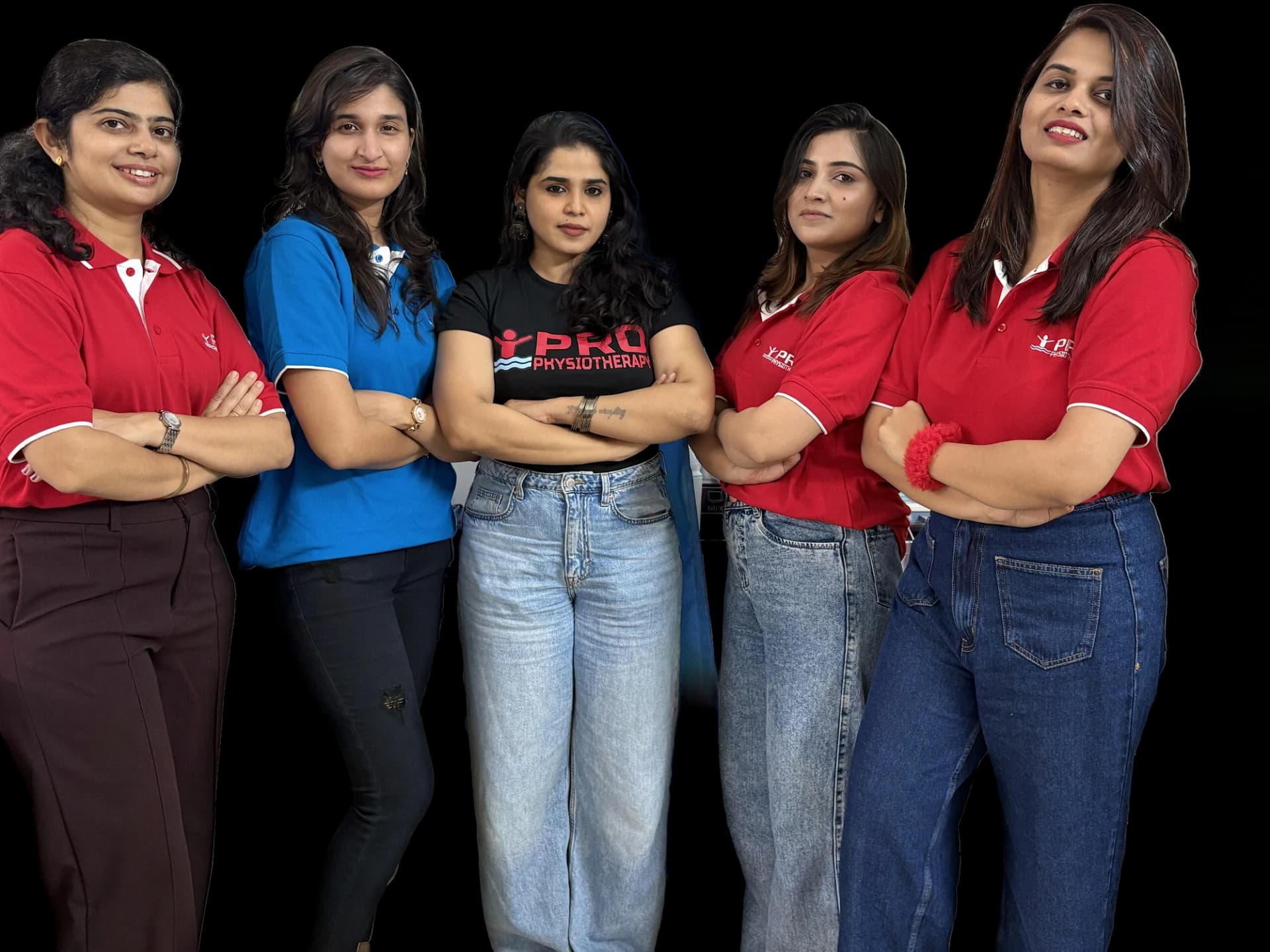
Post-natal physiotherapy in Bengaluru addresses diastasis recti abdominis, pelvic floor weakness, C-section scar adhesion and stress urinary incontinence. Pro Physiotherapy JP Nagar delivers a 7-step female-physio home-visit programme. Sessions from ₹549. detailed insurance-friendly receipt for mediclaim reimbursement.
One in three new Bengaluru mothers develops **stress urinary incontinence**, and up to 60% still have a **diastasis recti gap > 2 cm** at six months post-partum. Pro Physiotherapy JP Nagar delivers **female-physio-led** home-visit rehab targeting pelvic floor coordination, transversus abdominis reactivation, C-section scar mobilisation, and safe return-to-exercise. **Sessions from ₹549. detailed insurance-friendly receipt** with ICD-10 / CPT codes for reimbursement.
What Happens to a Woman's Body After Delivery
Pregnancy and delivery place a load on the pelvic floor, abdominal wall and lumbar spine that is unlike any other in modern life. The American College of Obstetricians and Gynecologists (ACOG) confirms that **up to 33% of women** experience stress urinary incontinence in the first year post-partum, and that Sperstad 2016 found a **60% prevalence of diastasis recti > 2 cm** at six weeks post-partum.
The good news is that early, structured pelvic floor and core physiotherapy — begun at 6 weeks post-partum (or 8 weeks post C-section) — resolves most of these problems in 12 weeks. The Pelvic, Obstetric and Gynaecological Physiotherapy (POGP) guidelines are the global reference. Our female clinicians (Iram Areef Mujawar UK-HCPC #PH149292, Dr Shaista Anjum MPT Gulf Medical, Dr Mandara TV MPT Neuro RGUHS 21TN047) are trained in this framework.
Post-Natal Day-1 Assessment (Female Clinician)
The 60-minute home visit is always conducted by a **female clinician**. Testing includes: diastasis recti check (inter-recti distance measured by caliper or ultrasound above/below umbilicus, > 2 cm = clinically significant), pelvic floor palpation & Modified Oxford Grading (0–5), PERFECT scheme (Power, Endurance, Repetitions, Fast contractions, Every-contraction-timed), C-section scar mobility assessment, lumbo-pelvic stability screen, and a bladder diary baseline.
ICD-10 codes used: O90.5 diastasis recti of pubis, N39.3 stress urinary incontinence, N81.9 pelvic organ prolapse unspecified, N90.89 non-inflammatory disorder of vulva/perineum. official receipt with these codes + CPT (97110 therapeutic exercise, 97112 neuromuscular re-education, 97530 therapeutic activity) accepted by every major Indian mediclaim insurer.
Structured Post-Natal Treatment Comparison Matrix
| Treatment Phase | Clinical Focus | Expected Milestone | Timeline |
|---|---|---|---|
| Early Recovery (Weeks 6–8) | Diaphragmatic breathing · transversus abdominis · pelvic floor coordination · C-section scar release | Correct connection · scar mobility restored | Weeks 6–10 |
| Progressive Reloading | Diastasis recti closure drills · glute activation · postural retraining | Inter-recti < 2 cm · Modified Oxford ≥ 3 | Weeks 11–16 |
| Return-to-Fitness | Impact reintroduction · run-jump progression · lifting technique | Symptom-free at 5 km walk-run · no leaks | Weeks 17–24 |
Transparent Pricing — From ₹549
No hidden fees · Insurance-reimbursableEvery session receipt carries ICD-10 codes accepted by Star Health, HDFC ERGO, ICICI Lombard, Care Health, Aditya Birla and Manipal Cigna for reimbursement. Outer-perimeter home visits carry a transparent ₹150 surcharge.
“Great experience at Pro Physiotherapy, JP Nagar 8th Phase. The doctor is excellent, and his team is very supportive. Really happy with the care for my back. Highly recommended!”
7 Safe Post-Natal Rehab Steps
The single most important starting point. Deep breath-in → pelvic floor lengthens; breath-out → gentle pelvic-floor lift with transversus abdominis. Practised 3×/day for 5 minutes.
Neutral-spine draw-in with tactile feedback (fingers on lower abdomen). Progresses to heel-slides, dead-bug and bird-dog patterns over 4 weeks.
Fascial-glide + linea alba tension work. Progressive loading through Pallof press, side-plank, and eventually loaded carries. No sit-ups or planks until inter-recti < 2 cm.
Scar massage in three directions (horizontal / vertical / rotational) beginning at week 6. Restores fascial glide and reduces scar sensitivity in most patients within 4 weeks.
Bladder diary, urge-suppression technique, and Modified Oxford-graded Kegel progression. Resolves 70–80% of post-natal stress urinary incontinence in 12 weeks.
Sitting posture, arm-support pillows, and breastfeeding lumbar-support technique. Removes 90% of the post-natal neck-and-upper-back pain cluster.
Discharge criteria: inter-recti < 2 cm, Modified Oxford ≥ 3, zero leaks on a 5-km walk-jog trial, symptom-free single-leg squat. Written clearance letter given for return to gym / running / dance.
Frequently Asked Questions
When can I start post-natal physiotherapy in JP Nagar?
Do you have female physiotherapists for post-natal home visits?
How much does post-natal pelvic floor physiotherapy cost in Bengaluru?
Can physiotherapy really close a diastasis recti gap?
Will mediclaim insurance reimburse post-natal physiotherapy in Bengaluru?
Book a clinical consultation at Pro Physiotherapy JP Nagar
FIFA-diploma-led team · 945+ verified 5★ Google reviews · Same-day slots · Transparent pricing.