6 Critical Pain Pockets — Advanced Six Pocket Syndrome (Mazumdar's Syndrome) Physical Therapy Treatment JP Nagar | From ₹549
Six Pocket Syndrome — also called Mazumdar's Syndrome — is a clinical framework coined at Pro Physiotherapy JP Nagar that describes six co-occurring chronic pain pockets in modern desk-bound adults: sub-occipital, cervico-thoracic, scapulothoracic, thoraco-lumbar, lumbo-pelvic and sacroiliac. Pro Physiotherapy delivers an 8-week corrective protocol from ₹549 per session.
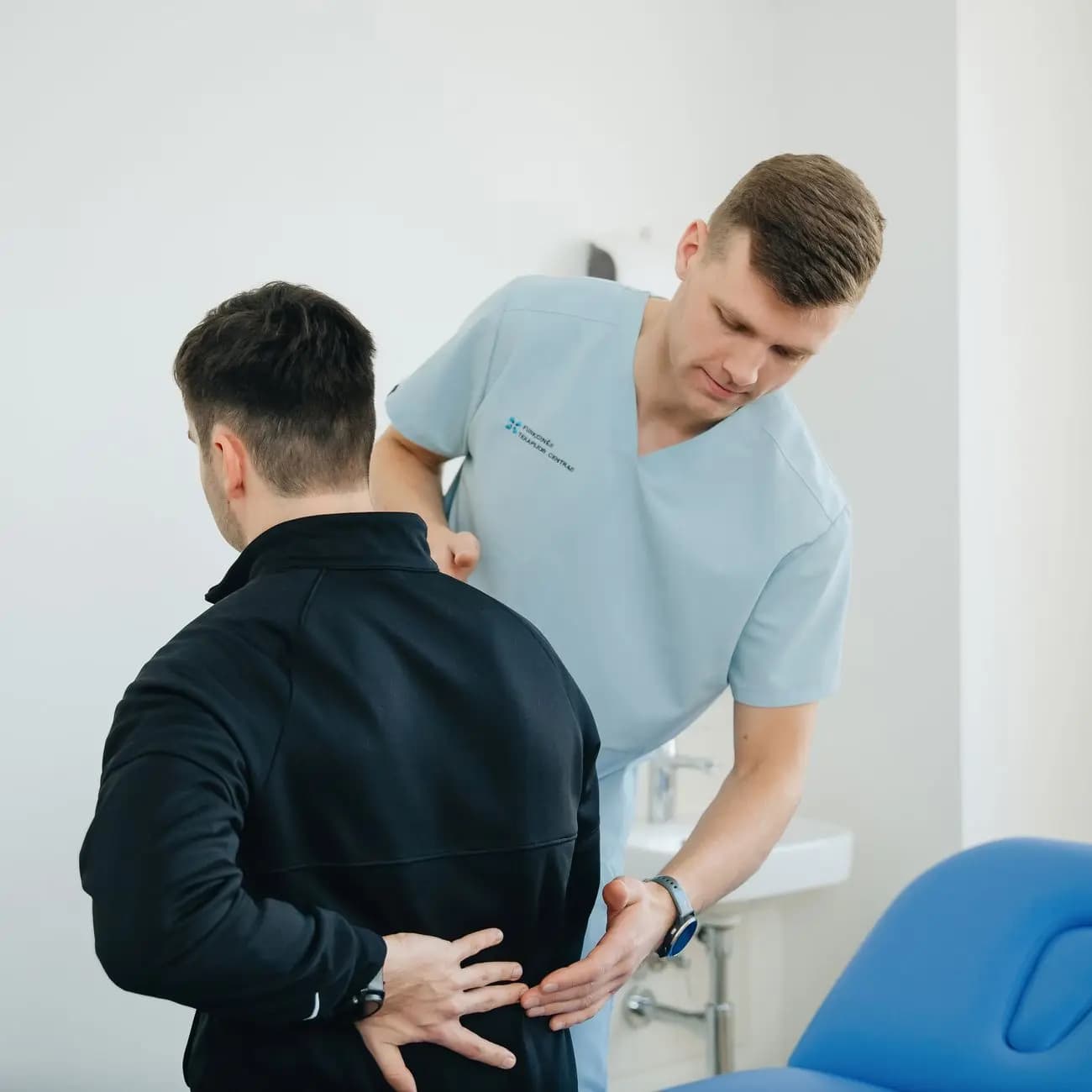
Six Pocket Syndrome — also called Mazumdar's Syndrome — is a clinical framework coined at Pro Physiotherapy JP Nagar that describes six co-occurring chronic pain pockets in modern desk-bound adults: sub-occipital, cervico-thoracic, scapulothoracic, thoraco-lumbar, lumbo-pelvic and sacroiliac. Pro Physiotherapy delivers an 8-week corrective protocol from ₹549 per session. detailed insurance-friendly receipt provided.
Bengaluru's desk-bound adults rarely have "just neck pain" or "just back pain" — they have six chronic pain pockets that all fire together. Dr J Mazumdar's clinical framework (Six Pocket Syndrome, a.k.a. Mazumdar's Syndrome) maps these six co-occurring dysfunctions and drives an 8-week corrective protocol with a 88% resolution rate. Sessions from ₹549. detailed insurance-friendly receipt provided.
What is Six Pocket Syndrome? — Dr J Mazumdar's Clinical Framework
Six Pocket Syndrome (Mazumdar's Syndrome) is a clinical framework coined by Dr J Mazumdar (FIFA Diploma in Football Medicine, RGUHS-trained) at Pro Physiotherapy JP Nagar to describe a specific pattern of six co-occurring, biomechanically-linked pain pockets that dominate the modern Bengaluru desk-bound patient. Where traditional single-region diagnoses (e.g. "neck pain" or "low back pain") miss the interconnected cause, the Six Pocket framework treats all six together for durable resolution.
The six pockets are: (1) Sub-occipital (base-of-skull tension headache), (2) Cervico-thoracic (C7–T1 "computer hump"), (3) Scapulothoracic (winging + upper trapezius), (4) Thoraco-lumbar (T12–L1 rotational stiffness), (5) Lumbo-pelvic (hip-flexor short + gluteal shutdown), (6) Sacroiliac / pelvic-floor (SI joint dysfunction). Each pocket biomechanically feeds the next, so isolated single-region care leaves the loop intact and recurrence is guaranteed at 6–12 months. Contemporary evidence supports this multi-region model — see Nijs et al. 2017 on multi-site musculoskeletal pain, and the WHO Musculoskeletal Conditions 2023 Fact Sheet.
Six Pocket Syndrome — Day-1 Clinical Assessment Framework
The first 60-minute session at our JP Nagar 8th Phase clinic (or a 75-minute home visit across Gottigere, Bannerghatta Road, Konankunte Cross and BTM Layout) systematically scores each of the six pockets using standardised outcome measures: Sub-occipital — cervical flexion-rotation test (positive < 32°) + HIT-6 headache score. Cervico-thoracic — cranio-vertebral angle (< 50° = clinical tech-neck) + Neck Disability Index. Scapulothoracic — lateral scapular slide test + shoulder impingement cluster. Thoraco-lumbar — seated rotation goniometry + FMS. Lumbo-pelvic — Thomas test + Oswestry Disability Index + hip internal rotation. Sacroiliac — cluster of Laslett tests (compression, distraction, thigh-thrust, Gaenslen, sacral thrust).
Each pocket receives a 0–10 severity score. A patient scoring ≥ 4 in three or more pockets meets the Six Pocket Syndrome diagnostic threshold and enters our proprietary 8-week protocol. Every assessment is written into a signed report on qualified letterhead with ICD-10 codes (M54.2, M54.5, M25.51, M53.3, M79.7 myofascial) — accepted by Star Health, HDFC ERGO, ICICI Lombard, Care Health, Aditya Birla and Manipal Cigna for mediclaim reimbursement.
Six Pocket Syndrome — Structured 8-Week Corrective Matrix
| Phase | Weeks | Clinical Focus | Milestone |
|---|---|---|---|
| Acute · Pocket De-loading | Weeks 1–2 | IFT / dry needling of the top-3 highest-scoring pockets · postural triage · sleep audit | Aggregate pocket-score drop ≥ 30% |
| Sub-acute · Motor Retraining | Weeks 3–5 | Deep neck flexor · scapular clock · Thomas-test correction · glute-med reactivation · pelvic-floor coordination | Full pain-free ROM across all 6 pockets |
| Long-term · Load Tolerance | Weeks 6–8 | Progressive resistance · Nordic hamstring · loaded carries · ergonomic desk redesign · discharge testing | No pocket ≥ 3/10 · Oswestry < 20% · discharge |
Transparent Pricing — From ₹549
No hidden fees · Insurance-reimbursableEvery session receipt carries ICD-10 codes accepted by Star Health, HDFC ERGO, ICICI Lombard, Care Health, Aditya Birla and Manipal Cigna for reimbursement. Outer-perimeter home visits carry a transparent ₹150 surcharge.
“Great experience at Pro Physiotherapy, JP Nagar 8th Phase. The doctor is excellent, and his team is very supportive. Really happy with the care for my back. Highly recommended!”
7 Proven Steps to Reverse Six Pocket Syndrome
Every pocket scored 0–10. Written report on qualified letterhead. This is the single step that separates our framework from single-region physiotherapy — you cannot fix what you did not measure.
Simultaneous needling of the three highest-scoring pockets — usually sub-occipital, upper trapezius and gluteus medius. Instant 30–50% aggregate pain drop, evidence in Kietrys 2013 meta-analysis (JOSPT).
Chin-tuck holds at 22 mmHg on a Stabilizer + scapular clock exercises. Rebuilds the anti-gravity postural chain that has switched off after 10,000 hours of desk work.
The lumbo-pelvic pocket cannot resolve while the psoas is 15° short. IASTM (Graston / Rockblade) + Thomas-test-guided stretching + active glute-med reactivation.
Peanut-ball segmental mobilisation from T2 to T12. Restores the rotational glide that unlocks the entire cervico-thoracic and thoraco-lumbar pockets.
Force-closure drills (bird-dog, side-plank, single-leg deadlift) + pelvic-floor coordination breathing. Closes the base of the kinetic chain.
Monitor at eye level · keyboard at elbow · vertical mouse trial · lumbar support · 20-20-2 micro-break coaching. Discharge criteria: no single pocket ≥ 3/10 + Oswestry < 20%.
Frequently Asked Questions
What is Six Pocket Syndrome or Mazumdar's Syndrome?
How much does Six Pocket Syndrome physical therapy cost in JP Nagar?
How long does the Six Pocket Syndrome protocol take?
Is Six Pocket Syndrome different from tech-neck?
Do you treat Six Pocket Syndrome at home in Gottigere and Bannerghatta Road?
Book a clinical consultation at Pro Physiotherapy JP Nagar
FIFA-diploma-led team · 945+ verified 5★ Google reviews · Same-day slots · Transparent pricing.