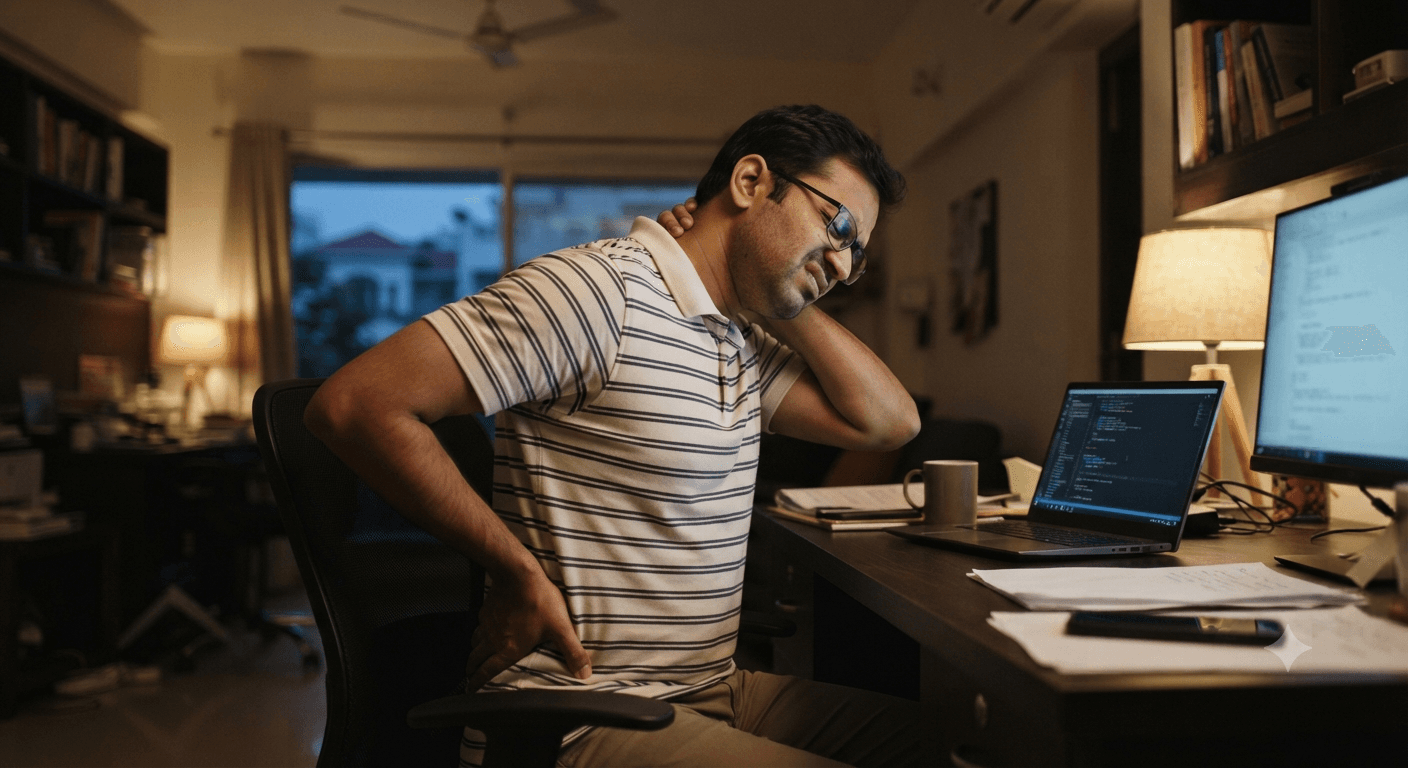
If you finished a Zoom-heavy day feeling like your lower back has locked into your chair, and now you’re searching for back pain physiotherapy near me in Bangalore, this guide is written for you. Bangalore’s combination of long working hours, unpredictable commutes, and hybrid work-from-home arrangements has produced an epidemic of preventable, treatable low-back pain across all age groups.
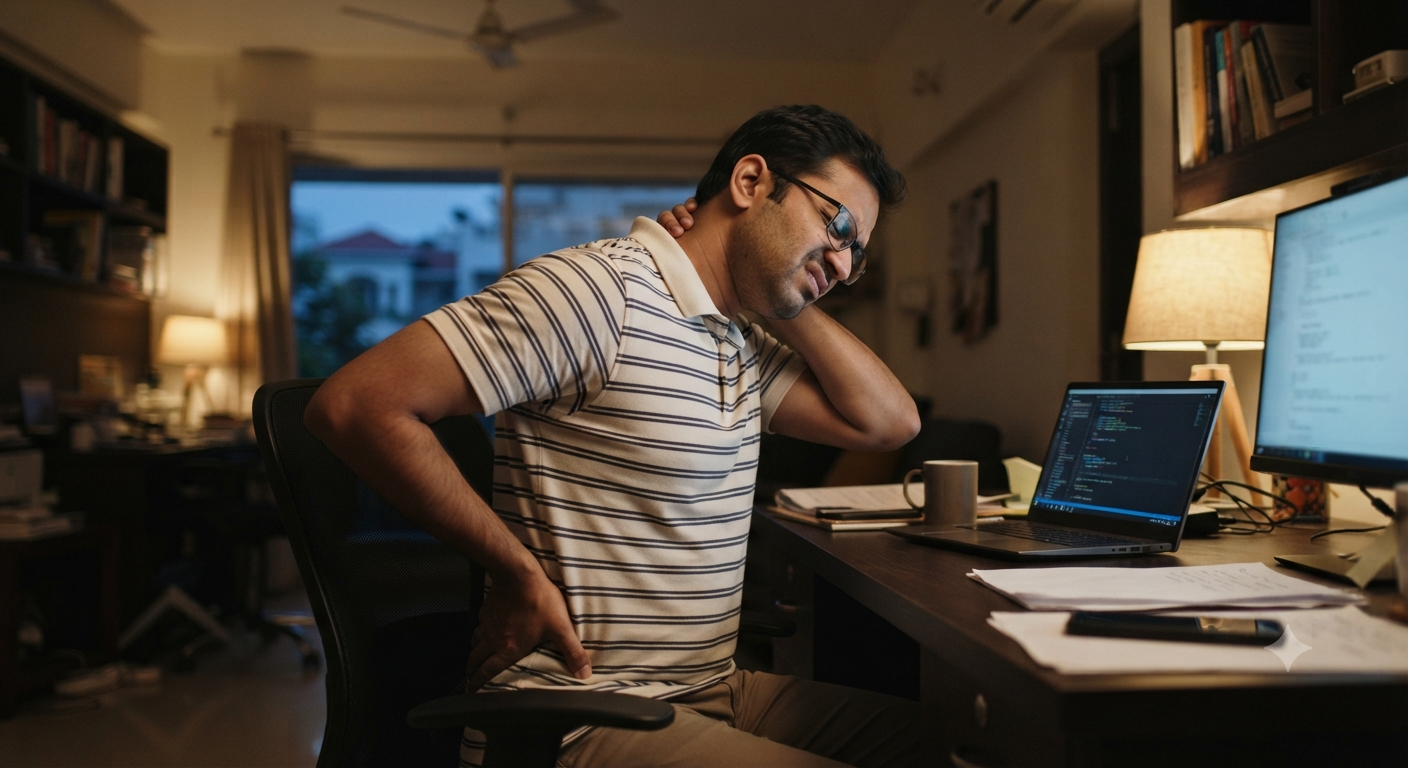
The good news is that non-specific mechanical low-back pain — which accounts for over 85% of adult back pain cases — responds extremely well to structured physiotherapy. Fewer than 10% of patients ever need imaging, injection, or surgical consultation. What matters is that you begin the right treatment before symptoms become chronic.
Understanding Non-Specific Mechanical Low-Back Pain
Non-specific mechanical low-back pain refers to back pain arising from the muscles, ligaments, fascia, discs, and facet joints of the lumbar spine — in the absence of red-flag pathology. A comprehensive analysis of sedentary work and low-back pain published on PubMed Central concluded that sitting more than six hours per day roughly doubles the incidence of chronic low-back symptoms.
In our clinic, the most common contributing factors we identify in Bangalore’s WFH and hybrid-work population are:
- Poorly adjusted home workstations — dining chairs, unsupported laptops, low couches.
- Prolonged sitting without micro-breaks.
- Weak deep core stabilisers (transverse abdominis, multifidus).
- Tight hip flexors from long sitting hours.
- Inadequate weekly physical activity below the 150-minute WHO guideline.
- Poor sleep positioning and unsupportive mattresses.
When Back Pain Requires Immediate Medical Attention
Before beginning any home exercise programme, rule out these red flags: unintentional weight loss, night pain that wakes you, fever, saddle-region numbness, bladder or bowel changes, progressive leg weakness, or a history of cancer. Any of these warrant urgent medical review before physiotherapy.
What a Reliable Back-Pain Physiotherapy Assessment Should Include
A rigorous assessment forms the foundation of durable recovery. If a clinic hands you a heat pack and generic stretches within five minutes, its treatment quality is unlikely to be reliable. Instead, look for:
1. Clinical History and Red-Flag Screening
Duration, onset mechanism, aggravating and easing factors, previous imaging, and any red-flag markers should all be documented.
2. Postural and Movement Screening
Sitting posture, standing posture, and functional movement patterns (bending, lifting, sit-to-stand) reveal the mechanical drivers of your pain.
3. Segmental Mobility and Neurological Examination
Segmental joint mobility (spring tests), straight-leg-raise, slump test, dermatome, myotome, and reflex assessment are all part of a competent lumbar examination.
4. Directional Preference Testing
The McKenzie method identifies whether repeated extension or flexion movements centralise your pain — a strong predictor of a durable non-surgical outcome.
5. Core Endurance Benchmarking
The McGill core-endurance tests (front, side, and back bridges) provide an objective baseline against which progress is measured.
The Evidence-Based Rehabilitation Framework We Use
Phase 1: De-load and Modulate (Weeks 1–2)
- Avoid prolonged flexion positions (deep sofas, low chairs).
- Introduce hourly micro-breaks with prone press-ups if extension-responsive.
- Manual mobilisation of stiff lumbar segments.
- Neural gliding for radiating leg symptoms.
- Deep-breathing retraining to reactivate the diaphragm-core system.
Phase 2: Reactivate and Realign (Weeks 3–4)
- Transverse-abdominis draw-ins with pressure biofeedback.
- Multifidus activation drills in four-point kneeling.
- Bird-dog progressions to integrate stabilisers dynamically.
- Hip-flexor lengthening and glute activation.
- Workstation ergonomic correction — use our free Interactive Ergonomic Workstation Customizer to calibrate desk, chair, and monitor.
Phase 3: Load and Integrate (Weeks 5–8)
- Progressive dead-bug and side-plank variations.
- Kettlebell deadlifts and goblet squats with intelligent load progression.
- Farmer’s carries for anti-flexion trunk endurance.
- Return-to-sport or return-to-gym conditioning.
Phase 4: Prevent and Sustain (Weeks 9–12)
- Twice-weekly maintenance strength routine.
- Daily two-minute mobility circuit (cat-cow, hip flexor stretch, thoracic extension).
- Quarterly clinical check-ins.
- Ongoing ergonomic review, especially when moving between office and home setups.
Home Strategies That Reduce Back Pain Immediately
Regardless of the underlying diagnosis, the following habits reduce baseline back pain within days for most patients. Reference resources include the Physiopedia clinical guide on low-back pain.
- Set a 45-minute sit-break timer. Stand, walk 90 seconds, and perform 8 cat-cow reps.
- Elevate your laptop. Use a stand plus external keyboard so the screen sits at eye level.
- Support your lumbar curve. A small rolled towel behind your lower back offloads the discs.
- Walk twice daily. Two 15-minute walks are more effective than one 30-minute session for spinal pain.
- Sleep on your side with a knee-pillow. This maintains neutral pelvic alignment overnight.
Why Home-Visit Physiotherapy Works So Well in Bangalore
Traffic is a major reason patients drop out of care in the second week — exactly when consistency matters most. Home-visit physiotherapy removes this barrier and allows the clinician to observe your actual desk, chair, sofa, mattress, and bathroom set-up. Small in-home changes (elevating a laptop screen by 12 cm, replacing a soft sofa with a supportive chair for evening work) frequently produce a 30–50% pain reduction within a week.
Our home-visit team covers JP Nagar, Jayanagar, HSR, BTM, Bannerghatta, Koramangala, Whitefield, and Electronic City. Same-day slots are usually available. See our full service portfolio for details.
What Results Should You Expect?
For non-specific mechanical low-back pain, most patients experience a meaningful reduction in pain within 2–4 sessions, functional restoration within 4–6 weeks, and durable recovery within 12 weeks provided the maintenance programme is followed. Chronic or radicular cases can extend to 12–16 weeks with defined checkpoints.
Common Mistakes That Delay Back Pain Recovery
Several patterns repeatedly delay back-pain recovery in our Bangalore clientele. Firstly, extended bed rest beyond 48 hours weakens deep spinal stabilisers and prolongs symptoms. Contemporary evidence strongly supports staying active within pain-free limits.
Secondly, jumping straight into deep spinal-flexion yoga poses (child’s pose, forward folds, seated forward bends) during acute flare-ups can irritate a sensitised disc. Directional-preference testing must guide early exercise choices.
Thirdly, wearing a lumbar support belt continuously during working hours weakens the deep core over months. Belts are useful for specific lifting tasks, not for daily desk work. Fourthly, purchasing an expensive orthopaedic chair without addressing the underlying movement pattern rarely resolves symptoms in isolation.
Fifthly, stopping physiotherapy the moment pain subsides is one of the most common recurrence drivers. Motor control and load tolerance take longer to normalise than pain, and the maintenance phase is essential. Sixthly, self-prescribed heavy deadlifts or barbell squats before a competent core assessment frequently trigger new episodes in our WFH population.
Frequently Asked Questions
How quickly does back pain physiotherapy near me in Bangalore work?
Most patients report a 30–50% reduction in symptoms within 2–4 supervised sessions across 2–3 weeks, with functional recovery in 4–6 weeks. Complete durable resolution typically occurs within 8–12 weeks of structured care and maintenance work.
Do I need an MRI before starting back-pain physiotherapy?
Usually not. Imaging is reserved for cases with red-flag features, progressive neurological deficits, or symptoms persisting despite 4–6 weeks of appropriate physiotherapy. Many MRI findings, including mild disc bulges, are common in pain-free adults.
Is home-visit back-pain physiotherapy in Bangalore reliable?
Yes, and often preferable for lumbar pain. Home visits eliminate traffic-triggered pain flare-ups, allow direct ergonomic assessment of your actual workspace, and dramatically improve adherence.
Can I keep working from home while undergoing physiotherapy?
In most cases, yes — with structured ergonomic changes. Our physiotherapists coach you on chair height, screen elevation, mouse-hand angle, and micro-break scheduling from your first session.
Which is better for back pain: physiotherapy or chiropractic care?
Systematic reviews suggest broadly similar short-term pain relief. However, physiotherapy consistently produces better long-term functional outcomes because of its emphasis on active strengthening, motor control, and self-management, rather than passive spinal manipulation alone.
End the cycle of chronic back pain. Book a clinical assessment with the physiotherapy team Bangalore’s hybrid workforce trusts. Schedule your consultation today →

