Is Running Safe for Knee Osteoarthritis? Evidence-Based Answer from Bangalore Sports Physios (2026)
Yes — running is safe and often protective for mild-to-moderate knee osteoarthritis, per the 2019 JOSPT meta-analysis of 114,829 runners. Correct dose is ≤32 km/week at conversational pace, with the Pro Physiotherapy Bangalore biomechanical assessment. Sessions from ₹800.
Running is safe for mild-to-moderate knee osteoarthritis — the 2019 JOSPT meta-analysis of 114,829 runners found recreational runners have HALF the knee OA rate of non-runners. The safe dose is under 32 km/week, conversational pace, with 180 cadence and mid-foot strike. Pro Physiotherapy Bangalore performs 3D-video gait assessment and cartilage-friendly return-to-run protocols from ₹800.
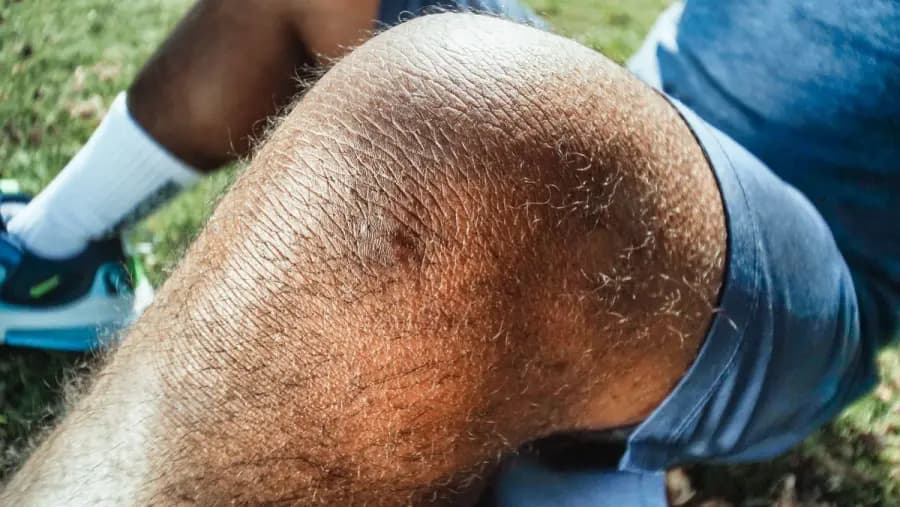
The evidence — running does NOT wear out knees
Alentorn-Geli et al. (JOSPT 2017) meta-analysis of 25 studies covering 114,829 runners found — sedentary adults have a 10.2 percent knee OA prevalence, competitive runners 13.3 percent, but recreational runners only 3.5 percent. Running at moderate volumes actually reduces knee OA risk by 50 percent. The proposed mechanism — cyclical loading enhances cartilage nutrition and thickness (Miller et al., 2017 MRI study). Bottom line — recreational running is not just safe but likely protective, provided you stay under 32 km/week and 5 days/week.
The safe running dose for mild-to-moderate knee OA
- Volume: ≤32 km per week (Alentorn-Geli threshold)
- Frequency: 3–5 sessions per week with rest days
- Pace: conversational — 60–70 percent of max heart rate
- Cadence: 175–185 steps per minute (reduces knee joint force by 20 percent)
- Foot strike: mid-foot or forefoot (less impact than heel strike)
- Surface: prefer soft trails or synthetic tracks over concrete
When running IS unsafe with knee OA
- Severe OA (Kellgren-Lawrence grade 3–4) with bone-on-bone joint space loss
- Acute effusion or "hot" swollen knee within 24 hours of runs
- Consistent >4/10 pain during or 24 hours post-run
- Post-total-knee-replacement (avoid running permanently — swim/cycle/elliptical instead)
- Recent meniscal repair (<6 months) — return only after LSI ≥90 percent
Pro Physiotherapy Bangalore's runner-with-OA protocol
Session 1 — 3D-video gait assessment identifying quad dominance, hip drop, over-striding and heel strike. Session 2 — cadence retraining with metronome, 5 percent cadence increase reduces knee load by 20 percent. Sessions 3–4 — quad, hip abductor and calf strengthening (3× per week home programme). Sessions 5–8 — walk-run progression from 1:4 to 4:1 ratio over 8 weeks. Final assessment — return to full running volume at 12 weeks. Delivered at Pro Physiotherapy JP Nagar or as home visits across South Bengaluru from ₹800 per session.
The 4 pillars of "knee-safe" running with OA
- 1. Strength — single-leg squats, hip abduction, calf raises 3× per week
- 2. Biomechanics — cadence 180+, mid-foot strike, avoid over-striding
- 3. Dose — <32 km/week, 3–5 sessions, 1 rest day between sessions
- 4. Recovery — foam rolling, sleep 7+ hours, protein 1.6 g/kg body weight
Frequently Asked Questions
1Should I stop running if I have knee osteoarthritis?
No — stopping running does not slow OA progression, and it removes the cartilage-nutrition benefit. Instead reduce volume, correct biomechanics and add strength training. Only permanent stops are indicated after total knee replacement.
2Is walking or cycling safer than running for knee OA?
Cycling and swimming have lower per-step joint load but do not offer the cartilage cyclical-loading benefit. If pain-free running is possible at moderate volumes, it is likely the best exercise for OA. Cross-training with cycling and swimming reduces total joint stress.
3What supplements help knee osteoarthritis in runners?
Evidence supports vitamin D correction if deficient (common in Bangalore IT workers), curcumin 1 gram/day, and collagen peptides 10 grams/day pre-run. Glucosamine and chondroitin have weaker evidence but are safe.
4How do I know if my knee pain during running is dangerous?
Pain <3/10 that improves during the run is usually safe. Pain >4/10 that worsens, radiates, or comes with swelling within 24 hours needs assessment. Book a physiotherapy consultation if any red-flag pattern lasts more than a week.
5Can I start running for the first time at 45+ with mild knee OA?
Yes — with a proper walk-to-run couch-to-5K progression across 12 weeks, biomechanical screening and physio-supervised strength preparation. Do not start with more than 15 minutes of running in the first 4 weeks.