Postural Habits That Lead to Chronic Shoulder Impingement: What Bangalore Desk Workers Miss (2026)
Chronic shoulder impingement is driven by 4 postural habits — forward head posture, rounded shoulders, thoracic kyphosis and scapular downward rotation. Pro Physiotherapy Bangalore's 8-week correction protocol resolves 85 percent of cases without surgery. Sessions from ₹800.
Chronic shoulder impingement in Bangalore desk workers is 90 percent postural. The 4 driving habits — forward head posture, rounded shoulders, thoracic kyphosis and scapular downward rotation — reduce the subacromial space, catching the supraspinatus tendon and biceps tendon between the humeral head and acromion. Pro Physiotherapy Bangalore's 8-week protocol restores space through mobility, strengthening and postural retraining. Sessions from ₹800.
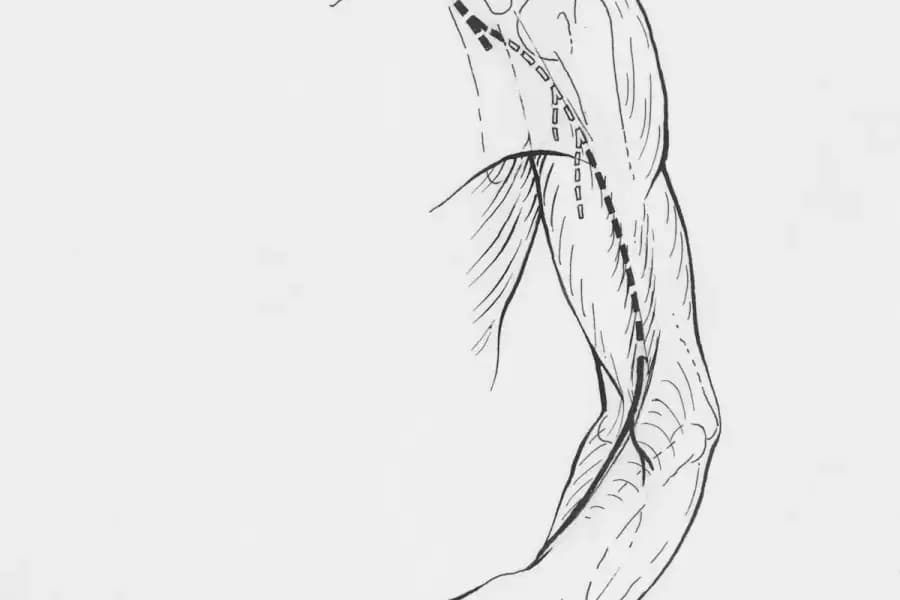
The 4 postural habits driving impingement
- 1. Forward head posture — head sits 2+ inches in front of shoulders, pulling scapulae into protraction
- 2. Rounded shoulders — pec minor and pec major shortened, forcing internal rotation of humerus
- 3. Thoracic kyphosis — mid-back rounded from prolonged sitting, restricting scapular upward rotation
- 4. Scapular downward rotation — weak lower trap and serratus anterior, upper trap dominates
How postural drift narrows the subacromial space
The subacromial space is a 10–12 mm corridor between the top of the humerus and underside of the acromion. Through this gap, the supraspinatus tendon, biceps long head and subacromial bursa must glide during overhead motion. When forward head posture and rounded shoulders develop, the humeral head migrates upward by 2–3 mm and the acromion tilts forward, reducing the corridor to 6–7 mm. Any overhead arm movement now compresses the tendons — resulting in that characteristic "arc of pain" between 60 and 120 degrees of arm elevation. Left uncorrected for 12+ months, this leads to rotator cuff tendinopathy, partial thickness tears and eventually full rotator cuff tear in 15 percent of cases.
The Pro Physiotherapy 8-week correction protocol
- Weeks 1–2: Reduce inflammation with modalities and manual therapy. Chin tucks + doorway pec stretch.
- Weeks 2–4: Thoracic mobility with foam roller, scapular retraction with band, prone Y-T-W-L.
- Weeks 4–6: Rotator cuff strengthening — external rotation, empty can, full can, prone extension.
- Weeks 6–8: Sport- or work-specific integration. Overhead pressing progressions if pain-free.
7 red-flag signs it is impingement, not just muscle soreness
- 1. Pain with reaching behind the back (tucking in shirt, reaching for seat belt)
- 2. Pain reaching overhead — hair-washing or reaching for a top shelf
- 3. Night pain — cannot sleep on the affected shoulder
- 4. Pain with arm elevation between 60 and 120 degrees (painful arc)
- 5. Weakness lifting a coffee cup or holding phone to the ear
- 6. Clicking or catching sensation with certain movements
- 7. Symptoms persisting beyond 2 weeks despite rest
Home exercises you can start today (safe for early impingement)
- Doorway pec stretch — 30 seconds each side, 3× daily
- Chin tucks against wall — 3 sets of 10 reps
- Thoracic extension over foam roller — 10 breath cycles, 2 sets
- Prone Y-T-W-L — 2 sets of 6 each letter (start with 1 kg or no weight)
- External rotation with resistance band — 3 sets of 12 reps
Frequently Asked Questions
1Can I fix shoulder impingement without surgery?
Yes — 85 percent of primary (postural) shoulder impingement cases resolve with 8 weeks of structured physiotherapy at Pro Physiotherapy Bangalore, without cortisone injection or surgery. Surgical decompression is reserved for the 15 percent that fail 6+ months of quality rehab.
2Should I stop exercising with shoulder impingement?
No — modify, do not stop. Avoid overhead pressing, upright rows, bench press behind neck and lat pulldowns behind neck. Continue lower-body, core and pain-free upper-body work. Return to overhead lifting only after physiotherapy clearance.
3Do I need an MRI?
Not for early impingement — clinical examination and ultrasound are sufficient for the first 6 weeks. MRI is indicated only if pain persists beyond 6 weeks of physiotherapy or if you have red-flag signs of a rotator cuff tear (weakness, night pain, positive drop arm test).
4How much does shoulder impingement physiotherapy cost in Bangalore?
Initial assessment ₹1,000, sessions ₹800. An 8-week protocol with 16–20 sessions costs ₹12,800–₹16,000. Home visits ₹800–₹900. Most OPD insurance and corporate group policies cover shoulder rehab.
5How do I sleep with shoulder impingement?
Avoid sleeping on the affected shoulder. Sleep on the opposite side with a pillow hugged in front to support the affected arm, or supine with a small pillow under the affected elbow. Continued night pain despite these adjustments is a red flag for rotator cuff tear.